The quality of censorship: The God Delusion in Malaysia

Kinokuniya_Richard_Dawkins_God_Delusion

I try to keep this blog focused on technology, but every once in a while the urge to veer off topic gets the better of me. The recent state of Malaysia has been one of paranoia and hyper-sensitivity. It seems that not a day goes by without a report of someone somewhere or ‘challenging’ the position of Islam, and that Muslims need to be united to stop this wave. Well if the solution was really Muslim unity, why doesn’t UMNO take it upon itself to dissolve and then the Muslims can be united behind PAS?

Here’s the deal…the internet is so big, that if you try hard enough, you’ll find something that offends you. Even if it is a 3 year-old video tucked away in some back alley of the internet, that shows a woman cleaning the feet of dogs.With a little elbow grease and some help from Google, you’ll have more than enough ‘offensive’ content to reveal day after day.

This recent spate of hyper-sensitivity I suspect will be used to justify some form of censorship of the internet, the government already has full control of both print and broadcast media, the only avenue it hasn’t fully controlled is online–and they’re just itching to start.

But even in the most hard-core censorship environments, things slip through. These are the false positives, and they exist everywhere from birth control pills to internet censorship. Imagine a much smaller internet of just 20 Billion pages, with 100 million ‘offending’ pages. If the government had a success rate of 99%, it’ll still wrongly block nearly 200 million websites. More importantly there would still be more than 1 million ‘offensive’ pages that would seap through the wall of censorship we construct. The futility of such an exercise should be apparent for anyone to see.

So futile in fact, that even in a fairy tale scenario of 99% accuracy would be no where near enough. If people had enough time to find a 3 year old video, they’d more than easily find those 1 million offensive web pages.

[Read more]

Hack TM Unifi: In case you’ve lost your default password

dir-615

There’s a lot of documentation online on how to hack your neighbours Wi-Fi, but sometimes you need to hack your own system. Usually its because you’ve change your router password and forgot it completely, leaving you in the cold desolate place we like to call “No router land”.

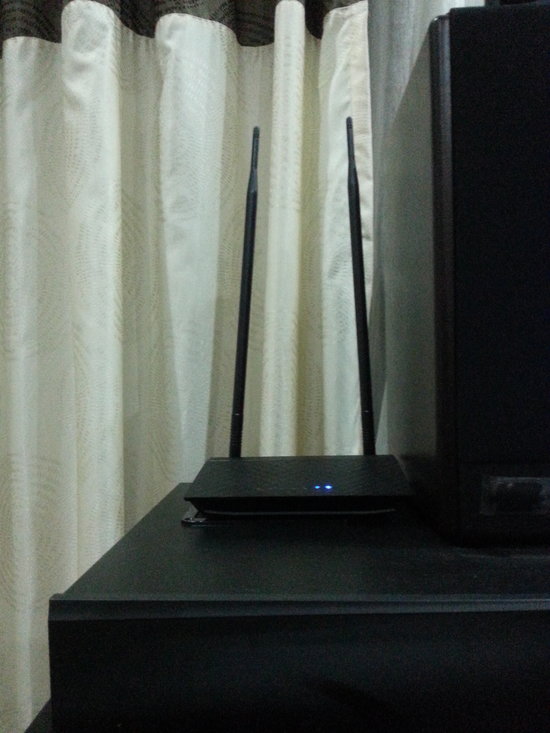
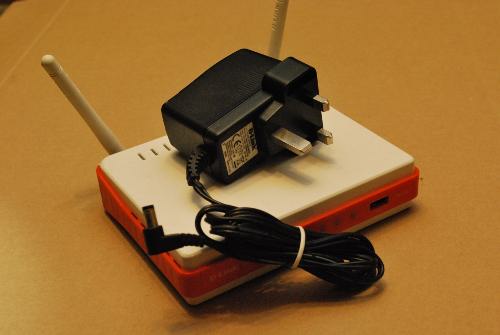
Don’t fear though, its actually pretty darn easy to hack your standard Dlink Dir-615 router (pictured above) that came stock with your Unifi subscription. Make no mistake, the router actually has some pretty sleek features, but Telekom Malaysia has a lackadaisical approach to security that makes hacking this router merely google searches away.

The default Unifi access credentials are:

Username : admin
Password :

Where the password field is literally left blank, (as it is).

However, if you’re locked out of your Unifi router, here’s a couple of things you could do to get your connection back:

[Read more]

Can you view Netflix in HD on Unifi

A lot of people have asked me if indeed you can view Netflix or Hulu or any other streaming service in HD on a regular 5Mbps Unifi connection (that’s the slowest possible Unifi connection).

Yes you can! Check out the “Now Playing HD” bit on the bottom right hand of the image below.

To learn how to watch Netflix or Hulu from Malaysia, check out my previous post here.

[Read more]

Mahathir censored on facebook

Quick, try this. Head over to your facebook page, and try to share a link from Mahathirs website, www.chedet.cc.

Can’t do it?

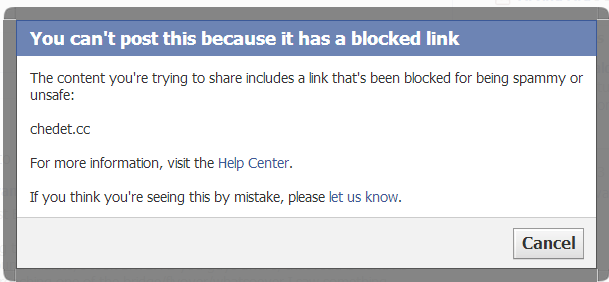
You most probably got a warning that looked something like this:

chedet_blocked

This has been going on for some time, but a couple of days ago, the Malaymail reported that not only is the website blocked, but articles pointing to Mahathirs ‘Chinese dilemma’  were also blocked. A note on Mahathirs Facebook page informed readers that:

[Read more]

Why Dato’ Sri Shabery Really wants to censor the internet

[box icont=“chat’]The social media in Malaysia is being monitored and existing laws are sufficient to weed out troublemakers trying to test the limits of free speech, Communications and Multimedia Minister Ahmad Shabery Cheek said today…

“The laws that we make are not to defend the party alone - that’s wrong,” Ahmad Shabery, who is also an Umno supreme council member, said.

In an attempt to curb internet freedom in Malaysia, the government is beginning a series of concerted statements to signal that internet censorship in Malaysia is merely a question of ‘when’ rather than ‘if’. Previously I’ve explored why internet censorship doesn’t alleviate or even mitigate the risk of communal violence, yet the government still presses on with trying to censor the internet, apparently jumping on the opportunity of Alvivi to make their case stronger.

So why is the government so enamoured by the thought of internet censorship, when clearly it doesn’t work?

[Read more]

Guest Post: Keyboards on Smartphones and the Future of Buttons

When a new phone hits the market, we tend to get terribly excited about its new features. And rightly so: what are boundaries for, if not to push frantically? But with the release of the latest BlackBerry 10 handsets, perhaps the most important contribution to the future of the smartphone might come in the form of the continuing inclusion of an actual QWERTY keyboard.

While the iPhone has been holding steady at four buttons, and Android handsets are caught in a strange limbo between buttons and always-on touch-screen style soft keys, BlackBerry has held fast with its products’ trademark keyboards while also offering touchscreen options.

[Read more]

Internet Censorship won’t work in Malaysia

Why shouldn’t Malaysia censor the internet?

Of late, the recent cases involving a certain pair of ‘sex’ bloggers and their ilk have prompted certain parties to call for more stringent regulations of the internet, but I for one think that we need to ensure that the internet remain free and un-censored–now more than ever. So why shouldn’t we censor the internet?

Rephrasing the question

The question itself deserves some space for discussion, the question should rather be posed as Why SHOULD we censor the internet? The onus should be left on those hoping to censor the internet to make their case before any defence should be made, implicit in the question of why we shouldn't censor the internet is the assumption that someone has already made a strong case for censorship--that isn't the case. In fact, what we have is merely anecdotal and conjecture rather than an argument backed up by facts and evidence.

A lot of people have made up their minds about it, mostly based on a series of assumptions–assumptions that usually false, and I hope to address the core assumption in this post.

[Read more]

Using Captchas on cybertroopers and botnets

Last week I wrote about the ‘rigged’ EDGE poll, that the EDGE had to eventually take down because they suspected someone was trying to bias the results. It was later revealed that a handful of IP addresses were responsible fro the bulk of the votes–presumably the fake ones. An IP address defines a unique internet connection, but not necessarily a unique device. You can try this yourself at home, and connect your PC, Laptop, Tablet and phone to your Wi-Fi router and then go online to check your IP from each–all of your devices will have the same ’external’ IP address.

[Read more]

The root cause of crime

Crime has become a hot-button topic these days, and while a lot of fingerpointing and blame-shifting has been going on in political circles, I think it’s wise we took a step back and try to address the root problem rather than its symptoms.

A brilliant piece by Evgeny Morozov from the Slate, points out the following:

[box icon=“chat”]

Forget terrorism for a moment. Take more mundane crime. Why does crime happen? Well, you might say that it’s because youths don’t have jobs. Or you might say that’s because the doors of our buildings are not fortified enough. Given some limited funds to spend, you can either create yet another national employment program or you can equip houses with even better cameras, sensors, and locks. What should you do?

[Read more]