Chip And Pin : An intro for Malaysians

In 2016, Chip and Pin will gradually be introduced in Malaysia, that means your Credit Cards now will prompt you for a PIN instead of signature during purchases. This will be a bit of a hassle, but it will be worth it,  here’s what you need to know about it and credit card transactions in general.

The 5 people you meet in card transaction
19205891971_2abaa89036_z

First off, a short primer on credit card transactions. In any business transaction, there are at least 2 actors involved, a buyer and a seller. In industry lingo we call them Merchants and Cardholders. These are important terms to remember, as we’ll use them extensively .

But a card transaction is far more complicated and involves at least 3 more actors, some of which you may not even be aware off. First, we have the party that issued the cardholder their card, the ‘Issuer’. If you have a credit card, chances are that credit card is tied to an line of credit issued by a bank, whether it’s HSBC, or Maybank, these are issuers, who have a relationship with the card holder.

Then we have the ‘Acquirer’. This is the financial institution that provides the merchant the ability to accept card transactions. Sometime this is as simple as just placing a card terminal on the merchant premise. The acquirer has a relationship with the merchant, and that’s why when you look at credit card receipts, they usually have a banks logo on them–that’s the acquirers logo.

Both the issuer and acquirer are usually banks, because credit cards deal with debt, and only registered financial institutions are authorized by law to perform such transactions (think of interest rates, and loan functions..etc)

So far, we have the Issuer that issues the card to the cardholder, and the Acquirer that provided the infrastructure to the merchant, but how do we tie all of them together. Here the final actor provides a network that connects all acquirers to all issuers, they’re called Card Schemes. You know them by their names, VISA, Mastercard, Diners, JCB, Discover..etc. The schemes provide the ability to connect acquirers and issuers, so when you go a merchant, you only ask them if they accept Master or Visa, and not worry about the specific acquiring bank. Similarly the merchant places a “Mastercard accepted” logo on their premise, because if they can accept one Mastercard, they can accept them all.

These 5 actors, the Cardholder, the Merchant, the Acquirer, the Issuer and the Scheme work seamlessly together to allow you to purchase goods and services using only a single piece of plastic we call a card.

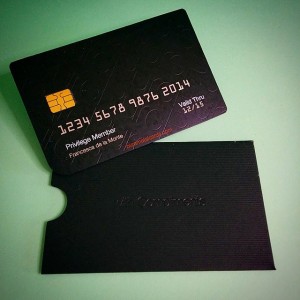
But what is a card?

[Read more]

PSI vs. API, Malaysia vs. Singapore air quality readings

Haze Malaysia

There’s been some controversy recently regarding the Air Pollutant Index (API) readings in Malaysia, with some even accusing the government of intentionally downplaying the readings.

I intended to find out exactly how the readings were different, and as a glorified techie come wannabe programmer I decide to use a data approach to this as opposed to a theoretical one. In case you’re wondering what the theoretical differences are, check out this cool article from cilisos, otherwise keep on reading.

At the crux of this issue, we first have to appreciate how  API or PSI readings are calculated. Both take measurements of pollutants in the air, but only take the highest concentrated pollutant to give you the reading value. It’s hard trying to consolidate something as complex as air quality into a single number, and as a result a certain amount of ‘simplification’ is required.

Theoretically, PM2.5 measures particulate matter up to 2.5 micrometers in diameter, while PM10 measures particulate matter of up to 10 micrometers in diameter, the Singaporean Government claims that PM2.5 is the main pollutant of concern during periods of smoke haze, and hence you’d expect PM2.5 readings to be higher than Pm10.

But that’s theoretically, what about empirically?

[Read more]

The problem with bio-metrics

8229504229_47a07ff41f_z

Passwords have always been a problem.

For a password to be adequately secure, you need a certain amount of randomness (or entropy in geek) associated with the password to ensure it can’t be easily guessed. The password monkey is less secure than the password k3ithI$one$3xydev1l, but the latter is inherently harder to remember (although still very true).

Remember you should use a different password for each online service you subscribe to, Your Jobstreet credentials should be different from your banking credentials. This way, if someone hacks into Jobstreet and compromises their passwords, your banking credentials remain secure.

What people often do is re-use one password across all their services, so that a compromise on one service is as good as a full-blown compromise across their entire online identity, a hack on that nutrition forum you visited two years could cause you to lose your life savings.

There in lies the trade-off, a easier to remember password is also easier to guess, and hence easier to hack (Google ’the fappening’ if you need more convincing), while a hard to guess password is harder to remember, and near impossible to execute if you need remember a different password for each your online services.

Which suggest that the problem isn’t passwords per se, but rather our human inability to remember long un-guessable passwords. Computers have long out-stripped us in this arena, and trying to overcome that is pretty much unthinkable at this point.

But what is the solution then? Well, in general we have 2 partial solutions.

[Read more]

Ransomware

ransomware

By now, you either know someone that’s been a victim of nasty malware or have yourself been on the business end of nefarious software. The perpetual duel between security companies and malicious elements in cyberspace has changed dramatically over time, and no change has been so dramatic as the rise of a new type of threat, a threat we call…ransomware!!

...but what is Ransomware?

Ransomware is piece of nefarious code that infects your machine the same way any ordinary virus or spyware would. But what differentiates it from other threats is what it does after its infected a system.

Ransomware immediately seeks out specific file types like Microsoft Documents, Excel Spreadsheets, digital pictures, all for the purpose of encryption. Different Ransomwares target different file types, but the idea is behind it is to seek out these files that are considered particularly valuable to the user, and one that a user would pay lots of money to retrieve if ever lost. These files are then quickly encrypted using ‘bank-level’ encryption ciphers making them un-readable to the user.

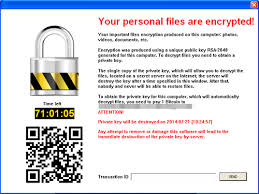
Once the files are ‘safely’ encrypted, the user is usually prompted with the–Pay us money or never see your files again!!

The famous (or infamous) cryptolocker, would request payments only in bitcoin, before the decryption key would be released to the user, the malware has kidnapped your files and the only way to get them back is to pony up the cash.

In essence, cryptolocker held your files from ransom, in much the same way kidnappers hold kids for ransom in those hollywood movies, but unlike hollywood this is real, and the one and only way to get back the files is either pray for a miracle, or make the payment.

[Read more]

Is Uni-tasking underrated?

Google reported that  91 per cent of its Malaysian respondents are “multi-screening” with their smartphones, meaning that while watching TV, or working a laptop, Malaysians were at the VERY SAME TIME, using their phones.

The Malay Mail reported this as Malaysians being champion multi-taskers, but I look at it as a negative, and instead view it as indication of just how easily distracted we are.

It used to be that multi-tasking was a prized asset in an employee, but as a regular cari-makan working adult, I have to say that trying NOT to multi-task is getting harder by the day. A brief boring moment in a call, a e-mail alert while you’re writing a document, a phone call in the middle of a presentation–trying to focus on ONE thing at ONE time is HARD.

[Read more]

Internet connections speeds in Malaysia

Broadband connection speeds

Not to beat a dead horse now, (you can read my previous articles here and here)but I’ll say it one last time, internet speeds aren’t exactly what we should be debating over these days. We should focus on internet penetration rates, and broadband penetration, and define these correctly.

The MCMC defines broadband as anything over dial-up. Which is stupid, because a 128kbps ISDN would be considered broadband, but certainly it wouldn’t feel like broadband to any user. It would crawl.

But at the same time, you can’t set the number too high to something like 100Mbps because what would you be able to consume at that speed which you wouldn’t at 5Mbps, in other words why would you need 100Mbps instead of 5Mbps, and what you actually mean by the term broadband?

So the question becomes, how fast is fast enough? What bandwidth is sufficient for the average Malaysian to enjoy the internet at the same level as anybody else. A lot of people buy a car without caring about the cars top speed, because very few people actually push the car to it’s top speed. Why isn’t it the same for internet bandwidth?

[Read more]

Hacking Government, Malaysian Style

hacking-government

The simplest definition of a hacker, is someone who breaks systems. We tend to equate systems to computers, but that’s a limited definition of the term. A system can also refer to a legal system or a set of processes that have nothing to do with technology.

For example, lawyers often hack around the law, looking for loopholes to exploit to give them an advantage in their case. A good lawyer is expected to work within the legal system of a country, but still try to bend it a wee bit for their clients. He’s not breaking the law, merely hacking it for his own good.

In the technology world, we sometimes define hackers as those to attempt to gain un-authorized access to computers, in other words an attacker that’s able to circumvent security measures of a server to gain access. This bypassing of security measures it what makes a hacker–but how does it reflect in a legal context?

[Read more]

How corporations lie to the technologically challenged

wpid-wp-1442992521638 (1)

Two weeks ago, Lowyat.net published a ‘challenge’ to their readers, one that would supposedly pay a cool RM100,000 to the winner.All you had to do was decrypt an AES-256 encoded blob of code (more accurately referred to as ciphertext).

As expected, no one won.

Because breaking that ‘military-grade’ encryption is beyond the capability of most normal human beings, and certainly not worth a paltry RM100,000 that was being offered. It’s the equivalent of offering 50 cents for someone to build a rocket capable of going to the moon. In fact, Rm100,000 is exactly the cash prize celcom offered for it’s cupcake challenge, because baking cup-cakes and breaking ‘military-grade’ encryption are the same thing.

Once the challenge has expired, Celcom conveniently launched their new zipit chat application, which surprisingly used AES-256 encryption as well, and more importantly they released some statistics of a ‘hackerthon’ they conducted in which 18 Million people viewed the challenge, and 17,000 registered to participate but none succeeded.

OK, so while there was no official announcement from Celcom to tie the original lowyat challenge to their new zipit app, it was quite plain for all to see.

So let’s go into why this upsets me.

[Read more]

Using the internet anonymously

Spying Program

While anonymity on the internet is slowly dying, there remain legitimate reasons for wanting to keep your online identity a secret from those meddling kids, governments or snooping criminals. From e-mailing leaked documents to commenting on blogs using pseudonyms or even just casual online chatting, utilizing the internet without leaving digital bread-crumbs behind you is a task that is getting more difficult over time, particularly when the big bad wolf that’s chasing you down is a rich and powerful government agency.

But to secure yourself online, you first need to understand whose attacking you, and what techniques they’re using. Adjusting your defense to suit your attacker is not just common sense, it is the only practical way to achieve a semblance of security and anonymity online without losing your mind and going into tin-foil hat wearing paranoia.

For example, if your adversary is the NSA, there’s nothing much you can do. This is a Federal agency so well resourced, they’re building a data-center in Utah that’s bigger than 5 Ikeas.Add to all this, the fact that it hires the cream of the crop from the Ivy-league maths programs, and you have brains and brawn that are orders of magnitude higher than the average person. If the NSA wants to target you, it’s game over. The only reason you’re not targeted by the NSA is that you didn’t factor high enough on the wanted list to merit their attention and taxpayer dollars.

But how about the Malaysian Government? How sophisticated are they and is it Game-over if the Malaysian government were targeting you?

Fortunately, our Governmen isn’t building a Utah data-center, or a Great Firewall and they’re no where close to the NSA, but they’re still a well-resourced organization that has the technical capability and financial muscle to do some serious harm against an ordinary citizen. And in order to secure yourself against them, you’d need to understand their techniques and tools.

Malaysian Government Surveillance 101

Childrens Privacy

Firstly, the government controls the ISP and Telcos, and hence the Government controls the network. The prevention of terrorism act (POTA) permits a Police Officer to waltz into any ISP or Telco and compel them to grant him your communication details without the need for any kind of judicial warrant, it also allows for the Police to place a digital wiretap on your communications (again without a warrant), but also without ever having to reveal the status of that wiretap to any court of law even if they convict of something. So anytime you’re using a Malaysian internet connection, you have to assume that the connection is compromised.

Thankfully, whenever I go into a starbucks, or use the WiFi at KLIA, I already assume the network is compromised–and there’s many ways to secure yourselves over a hostile network.

Secondly, the government has a record of purchasing surveillance spyware (twice!),  These are specialized software designed to infiltrate your laptop or smartphone, and start sending all your communication data direct from source. Again, one has to assume there is no judicial oversight over the use of these things.

If your end-device is compromised, and the Government has already installed spyware on your phone, laptop, tablet or even smart TV, there’s nothing you can do on the network end to secure things. So it’s wise to start securing the device before you think about the network, and that’s where we’ll begin.

But there’s a last and final attack-vector that a government can employ. Simply breaking into your home, and taking your laptop and smartphone away from you. Which means that you don’t just need to secure your device and network when you’re using it, but also when you’re NOT using it. In computer-geek circles we call this securing your data at rest, which protects your data while it’s just idling somewhere, and it turns out that’s not entirely easy to do either.

[Read more]

Change WiFi password on Maxis home fiber router

Got Maxis Fiber to your home, but want to change your WiFi passwords, then here’s how you do it.

Image-1-Maxis-Logon

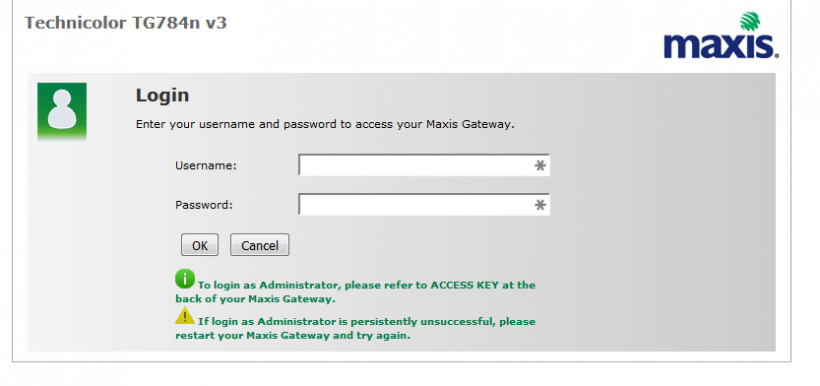
First you need to logon to your router. You can do so by opening your Web-Browser and type http://192.168.1.254 (where you’d normally type google.com), or just click here.

You should either see a picture like the above, then you’d need to enter the username and password, or if you haven’t setup a router password, then you’d see this:

[Read more]