Some interesting links you might want to check out during my interview on BFM today, will tidy up this list later in the week.
Office of Personnel Management Data Breach (Chinese hackers breaking into US Federal Employee Databases)
Some interesting links you might want to check out during my interview on BFM today, will tidy up this list later in the week.
Office of Personnel Management Data Breach (Chinese hackers breaking into US Federal Employee Databases)
Let’s start with the quote that set off the rage in my heart—
“You can see today that our Internet is slow. Not because it itself is slow but because a lot of people are using it,” he saidSo apparently, Datuk Ibrahim Saad, the National Civics Bureau (BTN) chief thinks that the internet is slow in Malaysia (it’s not that slow), because illegal downloads are hogging up the pipelines.The government agency chief blamed this on illegal downloads hogging Internet bandwidth here, adding that this does not happen in countries like Germany due to stricter enforcement.
“In Germany, the Internet is fast because if you download illegally, you will be charged by the authorities.
“You can’t download illegal movies, songs and pictures there, you need to pay but we here, anything also we download illegally right up to the pictures of our grandfathers.
“That is why the Internet highway is slow but we blame the government. The government has created proper Internet highways but we don’t know how to use it. Millions have been spent on this by the government,” he explained.
Let’s start with his first sentence, an substitute the word ‘internet’ with the name of any Malaysian highway you choose, personally I like to use the LDP:
You can see today that our LDP is slow. Not because it itself is slow but because a lot of people are using itHmmm, I guess in his infinite wisdom that makes sense to the BTN chief, but to me that just sounds like the highway wasn't built properly.
Let’s go to the 2nd statement:
In Germany, the Internet is fast because if you download illegally, you will be charged by the authorities.Now we come to the crux of the issue. If Malaysians weren’t illegally downloading, they’d have faster internet.“You can’t download illegal movies, songs and pictures there, you need to pay but we here, anything also we download illegally right up to the pictures of our grandfathers.
“That is why the Internet highway is slow but we blame the government
Here’s 4 reasons why he’s wrong.
This will easily be the most controversial blog post I ever wrote, so consider yourself warned.
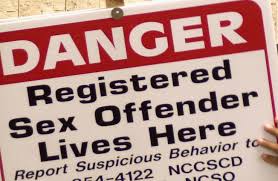
It’s controversial, because it touches on multiple taboos in our society, sex, child abuse and security theater. You see, there’s been a growing call for a national sex offender registry, especially in the wake of news that a British Pedophile had sexually abused up to 200 children in Malaysia.
The news is especially shocking for Malaysians, who are still coming to grips with the fact that a foreign ‘mat salleh’ abused our children, in our country, right under our fucking noses, and we’re only now learning about it….years after the abuse had taken place and even then, the details are sketchy.
As I said,many have renewed the call for a Sex Offender registry. The idea being, that if we start registering sex offenders, we could more easily monitor them, and be able cut-off their ability to further abuse children. It’s a great idea, but it wouldn’t have saved these 200 children, simply because Richard Huckle wasn’t convicted of any sexual abuse, he wouldn’t have been on the registry even if had one.
Then we have calls for better screening procedures of people who work with children. Another great idea, but again wouldn’t have stopped Richard Huckle. Maybe a extremely thorough and in-depth screening process that interviewed his parents, grandparents and fourth grade history teacher would have uncovered something about his psychology that may have triggered some alarms–but that level of screening is both unrealistic and a gross invasion of privacy.
Finally we have calls for better sex-education in schools, which I’m 100% in favor off. Proper sex education may have prompted one of Huckle’s victims to speak out and report the issue, which may prompted his arrest at a much earlier time–but ultimately these were impoverished children who were not given access to proper education anyway, so sex education in public schools probably wouldn’t have helped them.
But are we forgetting something obvious?
Gawker is the internet’s most slimy news organization, a online website that has no qualms disclosing people’s sexual infidelities regardless of the cost such disclosures have on their personal lives.
So for most people, seeing WWF superstar Hulk Hogan win a lawsuit against Gawker to the tune of $140 Million dollars was a real sight for sore eyes. But when it was revealed that Hogan was funded by Billionaire Peter Thiel, the internet suddenly lost its damn mind.
The last time I took a public train in Malaysia was 10 years ago.
That’s a long time to be spoilt by the luxury of having a car to drive around. So it was a pleasant surprise to see this viral story, about a man on a KTM kommuter train who saved a women from a group of youths who “misbehaved and demanded cash and their valuables”.
But then I remembered that KTM had launched ‘women-only’ coaches on their train, and this event had me pondering the security and social implications of such coaches, and concluded that women-only coaches are a terrible idea!!
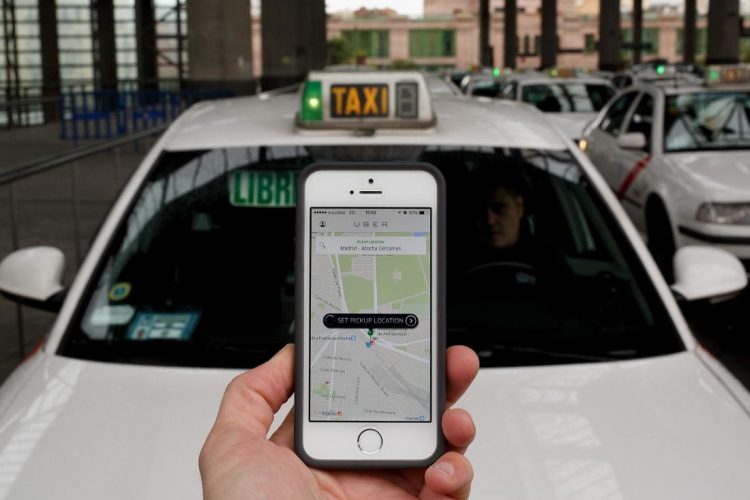
Two weeks ago, I took my first ever Uber ride, and here’s what I think is The Good, the bad and the ugly of Uber.
Bukit Jalil to Bukit Bintang for RM20.20. I remember a time when taxi drivers would charge me Rm10 just to drive from Menara Citibank to KLCC, or RM20 to drive from the Kelana Jaya LRT station to Subang Parade–and that was after I haggled, begged and bargained the prices down.

Some people are fans of medieval torture, and who can blame them. There’s just something about the sadistic treatment of people that makes us both want to watch with a bowl of popcorn in our hands, yet at the same time turn away in disgust and discomfort.
How else do you explain the popularity of shows like Saw?
I personally am a fan of the Iron Maiden, which before it became a name of rock band, was a evil torture device designed to impale its victims with spikes, but meticilously avoid crucial organs thereby prolonging the agony, letting the victim slowly bleed to death rather than die from something boring like heart failure or liver damage.
There’s a list on Wikipedia, that has all the gory details of medieval torture techniques, including keel-hauling (which I always though was some pirate term) and Scaphism, which is a Persian specialty where the victims dies of Diarrhea.
It’s a whole new level when the victim dies of Diarrhea—Diarrhea!! (and the smart-ass know it all types probably are thinking that Persia wasn’t in the medieval period–yes, I know and I don’t care)
[*Steve in the comments points out that Scaphism didn’t really die from diarrhea but from insects feasting on them. Which doesn’t exactly make it sound any better ]
Fortunately, we live in a modern world, where such barbarism is consigned to history classes rather than current affair shows, and trust me while water boarding is torture, it’s probably a couple of rungs lower on the cruelty scale than an Iron Maiden or Scaphism.
It’s good to view out past just to figure our far along we’ve come along as a species, to take stock in the great progress we’ve made in civil liberties. Torture is a fine example of such progress, but take for example the what 16th century English had to deal with, when they were sent to the Star Chamber!
People think of the media as the powerful behemoth that’s capable of swaying public perception.
On the contrary, I think public perception sways the media.
Companies like Facebook, Google and even Amazon, have gone all-in on the confirmation bias, the idea that people like and prefer information that confirms their existing ideas and biases. No one likes being told their wrong about religion, climate change or even smoke, you can a great Ted Talk by Eli Pariser here.
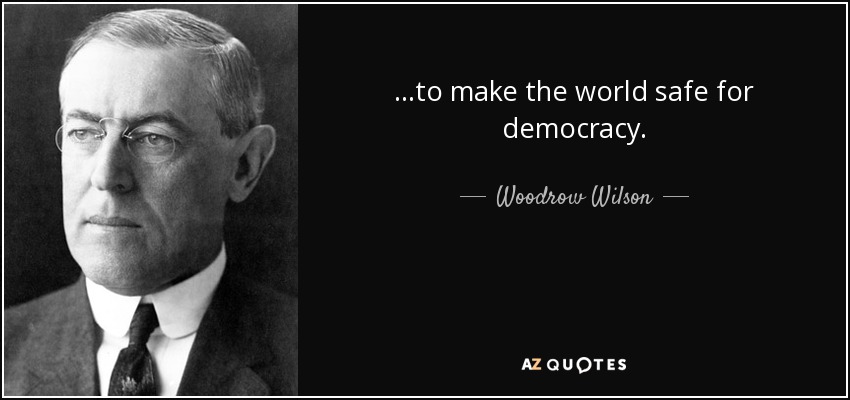
On April 2nd, 1917, the President of the United States of America addressed an extraordinary session in congress, asking them to authorize America to declare war against the central powers in World War 1.
Across the Atlantic, the European continent had been devastated by nearly 3 years of bloody conflict. Regardless of who started the war, President Wilson was sure the war was at it’s tail end and he knew that if America stayed a neutral observer any longer, it might not get a seat at the table to discuss peace terms.
President Wilson had an agenda to setup the League of nations, to ensure that such wars would never be waged again, and this would truly be the war to end all wars.
Sadly, with hindsight we know the truth, that America would reject the League of Nations, and the peace treaty at Versailles would act more as a 20 year armistice than an indication of true lasting peace.
America was a pale shadow of what is it today. Britain was the richest country on earth and had the biggest Navy while Germany had the best industry and the biggest army. America was a sleeping giant, but one awoken by WW1 and one that has never slumbered since.
But what made her go to war?
What compelled this great nation, whose on founding fathers warned would never go abroad in search of monsters to destroy, to take up arms and cross an ocean to wage war?
Many think it was Lusitania, some suggest the Zimmerman telegrams, but those were merely side distractions to the true cause of America’s involvement. The true reason for her involvement and ultimate victory is found in one sentence from the speech of President Wilson on that fateful day–The world must be made safe for democracy.
It wasn’t that America was trying to impose democracy on Europe or Asia, rather it was merely making it safe for democratic principles to thrive in the face of despotic monarch and militaristic dictators. Contemporary American foreign policy fails to distinguish between making the world safe for democracy and imposing democracy.
America can never please her critics, get too involved and she’s accused of meddling in affairs, while staying neutral and distant invites the critic of indifference to human suffering.
But not all dangers to democracy come in the form of dictators with armies at their disposal, and in one sense America continues to make the world safe–while the rest of us remain blissfully unaware of her efforts.
Nobody really knows how the FBI is hacking into iPhones.
Well nobody, except Cellebrite and the FBI themselves.
We can safely assume that the underlying crypto wasn’t hacked–that would be truly catastrophic for everyone’s security, and way above the pay grade of a company like Cellebrite.
So we have to conclude that somehow the FBI has managed to trick the iPhone into giving up it’s encryption keys, or bypassed the Passcode protections on the phone. Apparently the hack doesn’t work on iPhone 5S and higher devices, and obviously this can’t be a software bypass (because all iOS devices literally run the software), so it has to be a hardware limitation, one that probably affects the key storage.