Posts for: #Security &Amp; Privacy

The Government doesn’t buy spyware–yea right!

The Government has denied buying spyware from hacking team, they really should have checked with me before issuing the statement.

Spying Program

On the 23rd of November 2015, Datuk Seri Azalina Othman Said denied that the Malaysian government had procured spyware from hacking team. In a formal response (in Parliament!!), the Minister simply stated “For your information, no such device was purchased by the Prime Minister’s Department”.

For YOUR information, dear Minister, I don’t like being lied to, and oh look there’s a flying pig by the window.Next time ask your PR guys to call me before you go setting your pants on fire.

Ok folks, here’s a step-by-step on why we can trust the hacking team leak, why there’s conclusive proof Malaysia bought this spyware, and why we should be worried about the manner in which it is being used. So let’s go.

[Read more]

The PM’s year end cyber-security message

From: jibby@Malaysia.gov Sent: 23 Dec 2015 To: orangbawah@Malaysia.gov Subject: Cybersecurity Year end message.

*This message is intended for all Malaysian Government servants only, do not forward without prior approval*
Greetings and Salam 1Malaysia.

I want to use this year-end as an opportunity to discuss the important topic of Cybersecurity. This year was interesting for me personally, and for all Malaysians, and we need to be aware of cybersecurity issues in order to avoid situations where some people go bat crazy over a missing pendrive, or we’re struggling to interrogate a sysadmin in Thailand.

But let’s start with a Government Linked Company, Malaysian Airlines (MAS).

In February, MAS had their website hacked by a group calling themselves Lizard Squad, which appeared at the time to be affiliated with ISIS. However, I confirmed with my pal Badghdadi that Lizard squad are in no way related to our good friends at the Caliphate, and we should continue striving to be as brave as them.

Delving deeper into the hack, revealed it to be a domain registrar hijack, and was not a result of inadequate security from MAS. Essentially MAS registered their website with a registrar, and it was that registrar which was hacked, not MAS themselves. Let that be a lesson for us all, sometimes the responsibility of security rest not just with us, but with our IT vendors as well.

Another good example of IT vendors completely messing up is Miliserv.

[Read more]

Hackers and terrorist

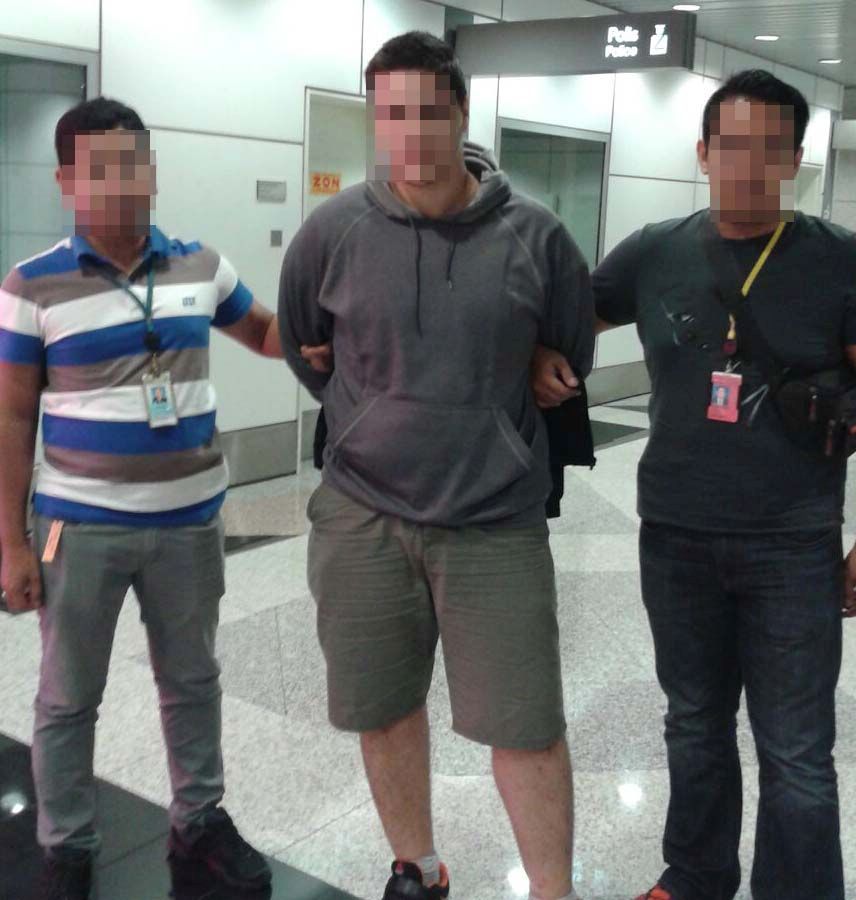
[caption id=“attachment_5307” align=“aligncenter” width=“550”]

Tip to newsmenL Next time blur out the photos and names on the ID tags as well.

Pic from TheMalaysianInsider, Tip to newsmen: Next time blur out the photos and names on the ID tags as well.[/caption]

There is no greater danger of tech illiteracy, than the way we treat hackers. A society that doesn’t understand technology will view those who can manipulate it as wizards and sorcerers.

Technology sufficiently advanced is indistinguishable from magic, and to most people that bar of being ‘sufficiently advanced’ isn’t set very high.

The magic analogy is apt, even in fiction, wizards are treated either with  awe, ala Harry Potter and the muggles, or disdain ala the Salem witch trials, where ignorance bred fear, which in turn led to persecution.

Regular readers of this blog will know Kevin Mitnick, the grand-daddy of hackers, who was once rumored to be able to launch a nuclear missile by whistling into a phone. Not only was the rumor patently false, it nudged Judges in American courts to deny him a bail hearing, something guaranteed to Mitnick by the countries Federal Constitution. Prosecutors quickly learnt that if you throw around words like Hacker and Nuclear, Judges will willingly jettison constitutional protections quicker than Han Solo can dump cargo to make the jump to light speed.

In the absence of a nuclear threat, law enforcement agencies have begun using terrorism, and found it equally effective in demonizing hackers and anyone else who could do seemingly magical things with bit and bytes on a computer screen.

[Read more]

Chip And Pin : An intro for Malaysians

In 2016, Chip and Pin will gradually be introduced in Malaysia, that means your Credit Cards now will prompt you for a PIN instead of signature during purchases. This will be a bit of a hassle, but it will be worth it,  here’s what you need to know about it and credit card transactions in general.

The 5 people you meet in card transaction
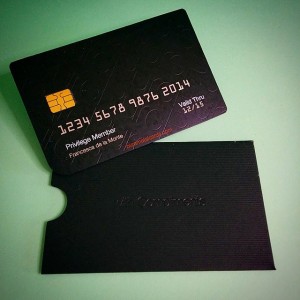
19205891971_2abaa89036_z

First off, a short primer on credit card transactions. In any business transaction, there are at least 2 actors involved, a buyer and a seller. In industry lingo we call them Merchants and Cardholders. These are important terms to remember, as we’ll use them extensively .

But a card transaction is far more complicated and involves at least 3 more actors, some of which you may not even be aware off. First, we have the party that issued the cardholder their card, the ‘Issuer’. If you have a credit card, chances are that credit card is tied to an line of credit issued by a bank, whether it’s HSBC, or Maybank, these are issuers, who have a relationship with the card holder.

Then we have the ‘Acquirer’. This is the financial institution that provides the merchant the ability to accept card transactions. Sometime this is as simple as just placing a card terminal on the merchant premise. The acquirer has a relationship with the merchant, and that’s why when you look at credit card receipts, they usually have a banks logo on them–that’s the acquirers logo.

Both the issuer and acquirer are usually banks, because credit cards deal with debt, and only registered financial institutions are authorized by law to perform such transactions (think of interest rates, and loan functions..etc)

So far, we have the Issuer that issues the card to the cardholder, and the Acquirer that provided the infrastructure to the merchant, but how do we tie all of them together. Here the final actor provides a network that connects all acquirers to all issuers, they’re called Card Schemes. You know them by their names, VISA, Mastercard, Diners, JCB, Discover..etc. The schemes provide the ability to connect acquirers and issuers, so when you go a merchant, you only ask them if they accept Master or Visa, and not worry about the specific acquiring bank. Similarly the merchant places a “Mastercard accepted” logo on their premise, because if they can accept one Mastercard, they can accept them all.

These 5 actors, the Cardholder, the Merchant, the Acquirer, the Issuer and the Scheme work seamlessly together to allow you to purchase goods and services using only a single piece of plastic we call a card.

But what is a card?

[Read more]

The problem with bio-metrics

8229504229_47a07ff41f_z

Passwords have always been a problem.

For a password to be adequately secure, you need a certain amount of randomness (or entropy in geek) associated with the password to ensure it can’t be easily guessed. The password monkey is less secure than the password k3ithI$one$3xydev1l, but the latter is inherently harder to remember (although still very true).

Remember you should use a different password for each online service you subscribe to, Your Jobstreet credentials should be different from your banking credentials. This way, if someone hacks into Jobstreet and compromises their passwords, your banking credentials remain secure.

What people often do is re-use one password across all their services, so that a compromise on one service is as good as a full-blown compromise across their entire online identity, a hack on that nutrition forum you visited two years could cause you to lose your life savings.

There in lies the trade-off, a easier to remember password is also easier to guess, and hence easier to hack (Google ’the fappening’ if you need more convincing), while a hard to guess password is harder to remember, and near impossible to execute if you need remember a different password for each your online services.

Which suggest that the problem isn’t passwords per se, but rather our human inability to remember long un-guessable passwords. Computers have long out-stripped us in this arena, and trying to overcome that is pretty much unthinkable at this point.

But what is the solution then? Well, in general we have 2 partial solutions.

[Read more]

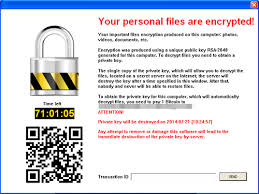
Ransomware

ransomware

By now, you either know someone that’s been a victim of nasty malware or have yourself been on the business end of nefarious software. The perpetual duel between security companies and malicious elements in cyberspace has changed dramatically over time, and no change has been so dramatic as the rise of a new type of threat, a threat we call…ransomware!!

...but what is Ransomware?

Ransomware is piece of nefarious code that infects your machine the same way any ordinary virus or spyware would. But what differentiates it from other threats is what it does after its infected a system.

Ransomware immediately seeks out specific file types like Microsoft Documents, Excel Spreadsheets, digital pictures, all for the purpose of encryption. Different Ransomwares target different file types, but the idea is behind it is to seek out these files that are considered particularly valuable to the user, and one that a user would pay lots of money to retrieve if ever lost. These files are then quickly encrypted using ‘bank-level’ encryption ciphers making them un-readable to the user.

Once the files are ‘safely’ encrypted, the user is usually prompted with the–Pay us money or never see your files again!!

The famous (or infamous) cryptolocker, would request payments only in bitcoin, before the decryption key would be released to the user, the malware has kidnapped your files and the only way to get them back is to pony up the cash.

In essence, cryptolocker held your files from ransom, in much the same way kidnappers hold kids for ransom in those hollywood movies, but unlike hollywood this is real, and the one and only way to get back the files is either pray for a miracle, or make the payment.

[Read more]

Hacking Government, Malaysian Style

hacking-government

The simplest definition of a hacker, is someone who breaks systems. We tend to equate systems to computers, but that’s a limited definition of the term. A system can also refer to a legal system or a set of processes that have nothing to do with technology.

For example, lawyers often hack around the law, looking for loopholes to exploit to give them an advantage in their case. A good lawyer is expected to work within the legal system of a country, but still try to bend it a wee bit for their clients. He’s not breaking the law, merely hacking it for his own good.

In the technology world, we sometimes define hackers as those to attempt to gain un-authorized access to computers, in other words an attacker that’s able to circumvent security measures of a server to gain access. This bypassing of security measures it what makes a hacker–but how does it reflect in a legal context?

[Read more]

How corporations lie to the technologically challenged

wpid-wp-1442992521638 (1)

Two weeks ago, Lowyat.net published a ‘challenge’ to their readers, one that would supposedly pay a cool RM100,000 to the winner.All you had to do was decrypt an AES-256 encoded blob of code (more accurately referred to as ciphertext).

As expected, no one won.

Because breaking that ‘military-grade’ encryption is beyond the capability of most normal human beings, and certainly not worth a paltry RM100,000 that was being offered. It’s the equivalent of offering 50 cents for someone to build a rocket capable of going to the moon. In fact, Rm100,000 is exactly the cash prize celcom offered for it’s cupcake challenge, because baking cup-cakes and breaking ‘military-grade’ encryption are the same thing.

Once the challenge has expired, Celcom conveniently launched their new zipit chat application, which surprisingly used AES-256 encryption as well, and more importantly they released some statistics of a ‘hackerthon’ they conducted in which 18 Million people viewed the challenge, and 17,000 registered to participate but none succeeded.

OK, so while there was no official announcement from Celcom to tie the original lowyat challenge to their new zipit app, it was quite plain for all to see.

So let’s go into why this upsets me.

[Read more]

Why we fear ‘hackers’: Dangers of Technical Illiteracy

anonymousmask380-300x225

Are you afraid of Hackers? Do you lie restless at night thinking of what might happen if they got into your bank account, facebook profile, or e-mail. Perhaps you’re also worried about that they might hack into a forum you visit, or that they might get into your personal messages on whatsapp.

It’s true that hackers are able to do all of these things, but the public perception of hackers really isn’t quite justified, and this false perception can lead to terrible outcomes.

Take last weeks post about the hacktivist group Anonymous. In it I expanded on the public fear of anonymous and how that didn’t correspond to the actual damage that the group causes. Sometimes all Anonymous does is a DDOS on a public website, that still takes some skill, but far removed from actually infiltrating a server. Yet, most people wouldn’t be able to differentiate a DDOS attack of a website to a compromise of an actual server, and this inability leads then to disproportionately fear hackers, worse still it leads them to lump all security related incidences into a single bucket called “hacked by hackers”.

But Why?

Why are people so afraid of hackers? And why is there a huge discrepancy between what some of these hackers are actually doing and the fear that the average citizen has of them.

I have one theory–ignorance, or more specially tech-illiteracy.

[Read more]

Hacking Team got Hacked, and here’s what Malaysia Bought

[caption id=“attachment_5085” align=“aligncenter” width=“550”]

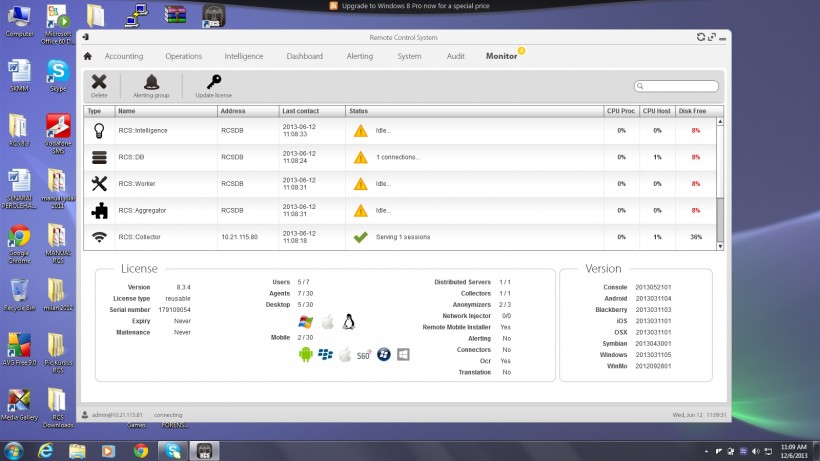
RCS monitor

A screenshot of the RCS Software from Hacking Team[/caption]

There are two types of governments in the world, Those that build complex surveillance software to spy on their citizens, and those that buy them–and our government is more the buying type.

Few nation-states have the budgets to build out complex surveillance software, but some are finding that ‘off the shelf’ software sold by dodgy companies are just as effective at a fraction of the price. The problem with buying of course, is that sometimes those dodgy companies that are manufacturing these spying software also sell their wares to repressive regimes like Sudan, and being on the same customer list with Sudan doesn’t quite bode well for any ‘moderate’ government.

Take Gamma Corp for example, the organization responsible for the FinSpy and Finfisher suite used by the Malaysian government in the run-up to the 2013 General elections. Another is Hacking team, an Italian based company that produces similar remote control software (RCS).

And in a bit of internet karma–both of these companies were hacked themselves…possibly by the same person.

In August 2014, Gamma was hacked and had 40GB of data forcefully exfiltrated from their servers. My analysis of that leak, revealed no information about Malaysian purchases of their FinSpy software simply because a large chunk of that data was encrypted.

Recently however, Hacking Team had a much more severe attack, one that managed to extract 10 times more data, and here I found ample evidence of Malaysian government agencies procuring spyware from Hacking Team presumably to be used against Malaysians.

The question of course is should you be worried, the answer is Yes, and not just for the obvious reasons. After combing though a trove of documents, I found that 3 government agencies procured the ‘flagship’ RCS software from Hacking team, and from my layman’s understanding of the law, none of them have authority to actually use it.

Worst still, some e-mails point to incompetent IT skills as well as bad Procurement practices, that actually annoyed hacking team’s salesforce. I will conclude this post with why this attack on Hacking Team has a positive outlook for regular internet users, and why our government agencies procuring this stuff isn’t exactly ALL THAT BAD.

[Read more]