Posts for: #Misc

Security theater on KTM trains

The last time I took a public train in Malaysia was 10 years ago.

That’s a long time to be spoilt by the luxury of having a car to drive around. So it was a pleasant surprise to see this viral story, about a man on a KTM kommuter train who saved a women from a group of youths who “misbehaved and demanded cash and their valuables”.

But then I remembered that KTM had launched ‘women-only’ coaches on their train, and this event had me pondering the security and social implications of such coaches, and concluded that women-only coaches are a terrible idea!!

[Read more]

The ugly truth about Uber

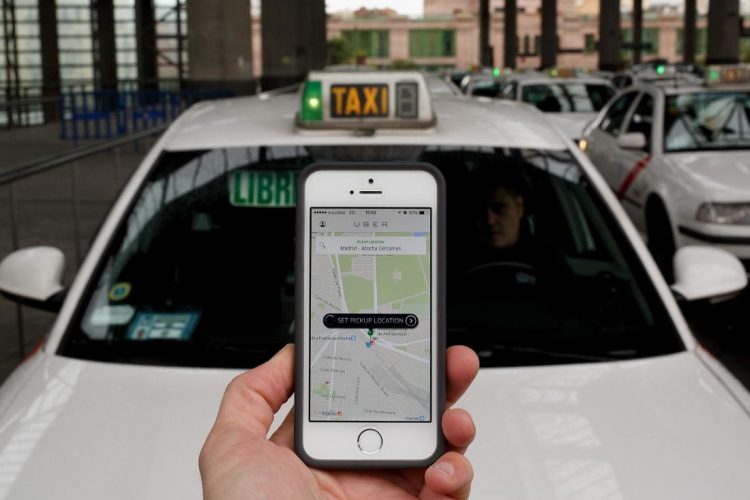
MADRID, SPAIN - OCTOBER 14:  In this photo illustration the new smart phone taxi app

Two weeks ago, I took my first ever Uber ride, and here’s what I think is The Good, the bad and the ugly of Uber.

The Good

The app worked perfectly out of the box, it was intuitive, and the drivers that fetched me from (and to) the Toyota service center were courteous and friendly. What was even more shocking was the price--Uber is freaking cheap.

Bukit Jalil to Bukit Bintang for RM20.20. I remember a time when taxi drivers would charge me Rm10 just to drive from Menara Citibank to KLCC, or RM20 to drive from the Kelana Jaya LRT station to Subang Parade–and that was after I haggled, begged and bargained the prices down.

[Read more]

The new media is powerless

People think of the media as the powerful behemoth that’s capable of swaying public perception.

On the contrary, I think public perception sways the media.

Companies like Facebook, Google and even Amazon, have gone all-in on the confirmation bias, the idea that people like and prefer information that confirms their existing ideas and biases. No one likes being told their wrong about religion, climate change or even smoke, you can a great Ted Talk by Eli Pariser here.

[Read more]

The relationship between surveillance and censorship

Spying Program

In the online world, surveillance and censorship are two sides of the same coin, you can’t have one without the other.

When the government moots a ‘blogger registration’ act , we automatically infer it to be part of a wider censorship initiative, an attempt to control the narrative by subtlety telling bloggers “we know who you are, so watch what you say”.

We intuitively get that putting a whole community under surveillance is a bid to control expression within that community, and if someone was even ‘potentially’ watching you–your behavior would change.

But the internet has made the connection between surveillance and censorship work in reverse, not only does surveillance lead to censorship,  but censorship leads to surveillance as well.

[Read more]

Singapore Historical PSI Readings in Excel

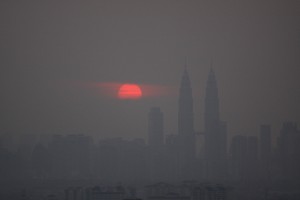
Haze Malaysia

Every now an again, I brush off the dust from an old laptop I have in the corner, and boot-up a couple of forgotten python scripts.

One of those scripts would scrap the DOE Malaysia website for API readings in Malaysia, unfortunately, those damn fools at the DOE now only publish 7-day data, and completely wipe off anything older–for some unknown reason.

I even contacted my ‘insider’ over at MDEC to help out, since she’s leading the open data initiative, but I’ve not had any response. So I’ve stopped work on the collating Malaysian API readings–for now. I suppose I could create a schedule job to scrape the website on a frequent basis, but that’s not something I’m interested in at the moment.

[Read more]

Anti-TPP Ideologies?

2 weeks ago, Wan Saiful Wan Jan. the chief executive of the Institute for Democracy and Economic Affairs (IDEAS) penned an opinion piece in thestar claiming that there was a prevalence of anti-TPP ideologies in Malaysia.

The Gist of his piece centered on 4 key points:

  1. The Anti-TPP ideologues opposed the bill before knowing what it was, and therefore must be stupid (or bomohs)
  2. Opponents of the TPP oppose trade liberalisation
  3. TPP like any other free trade agreement was negotiated in secret and not exceptional
  4. That the government was doing a bad job communication the TPP to the rakyat
Apart from point 4, all his other points are either red-herrings, or completely wrong.

Let’s go through them one by one:

[Read more]

The price of freedom

The price of freedom is the possibility of crime, and if you’re unwilling to pay that price, don’t be surprised when your freedom is taken away from you.

In a free country, it’s impossible to prevent a mad lunatic from getting a knife and stabbing people on a train, you might prevent some lunatics but you can’t prevent them all. The best you can hope for is that rescue comes fast enough before anything serious occurs.

[Read more]

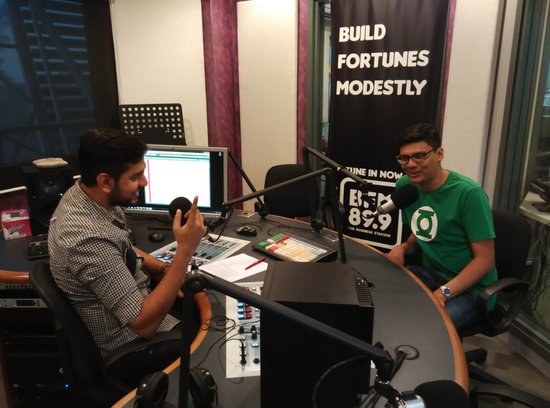
Keith on BFM

Keith_on_BFM_Tech_Talk

3-4 weeks ago, I pimped myself an interview on BFM, and yesterday it finally aired. Woohoo!!

Here’s the audio, and below are some show-notes you might be interested in if you want to learn more. I searched for these links AFTER the show, so they may not be 100% in step, but good place to start.

Show notes:

  1. My post on how to change Unifi WiFi password and a bonus note, here's how to hack them.
  2. Windows Tech Support Scam , here's another and here's how some pros respond
  3. Why Anti-Virus is dead from Brian Krebs
  4. Russian Business Network (I wrongly called them the Russian Business Alliance on the podcast): Wikipedia Link is here, but I suggest buying Spam Nation by Brian Krebs, easily the best book on the subject.
  5. Target hacked through their HVAC supplier, while their supplier was using anti-virus
  6. Kevin Mitnick on social engineering and corporate inoculation.
  7. Cybersecurity professional shortage...trust me, IT is the way to go.
  8. Security frameworks like PCI-DSS, I should have mentioned it.
  9. My favorite password manager: Lastpass
  10. The Fappening (if you don't know what it is, please click the link NOW)
  11. Ashley Madison password, rights and wrongs.
  12. Why I don't like bio-metrics
  13. OPM Hack : you need to know this
  14. TheStar reporting on teen winning award from Google (fake report)
  15. Google Malaysia was hacked--and my explanation on why it wasn't.
  16. My take on our view of hackers and specifically anonymous
  17. Tech Journalism in Malaysia
  18. Ahmed didn't build his clock and now he's suing for $15 Million--damn.
  19. Tony Stark asking to boost ISDN by 15%.
  20. Hacker who claimed he could hack a plane avionics from the seat.
I really enjoyed the interview, and felt it came out really well.

Shout out to Jeff Sandhu for the brilliant work, and let me know if you enjoyed the show.

[Read more]

PSI vs. API, Malaysia vs. Singapore air quality readings

Haze Malaysia

There’s been some controversy recently regarding the Air Pollutant Index (API) readings in Malaysia, with some even accusing the government of intentionally downplaying the readings.

I intended to find out exactly how the readings were different, and as a glorified techie come wannabe programmer I decide to use a data approach to this as opposed to a theoretical one. In case you’re wondering what the theoretical differences are, check out this cool article from cilisos, otherwise keep on reading.

At the crux of this issue, we first have to appreciate how  API or PSI readings are calculated. Both take measurements of pollutants in the air, but only take the highest concentrated pollutant to give you the reading value. It’s hard trying to consolidate something as complex as air quality into a single number, and as a result a certain amount of ‘simplification’ is required.

Theoretically, PM2.5 measures particulate matter up to 2.5 micrometers in diameter, while PM10 measures particulate matter of up to 10 micrometers in diameter, the Singaporean Government claims that PM2.5 is the main pollutant of concern during periods of smoke haze, and hence you’d expect PM2.5 readings to be higher than Pm10.

But that’s theoretically, what about empirically?
[Read more]

Is Uni-tasking underrated?

Google reported that  91 per cent of its Malaysian respondents are “multi-screening” with their smartphones, meaning that while watching TV, or working a laptop, Malaysians were at the VERY SAME TIME, using their phones.

The Malay Mail reported this as Malaysians being champion multi-taskers, but I look at it as a negative, and instead view it as indication of just how easily distracted we are.

It used to be that multi-tasking was a prized asset in an employee, but as a regular cari-makan working adult, I have to say that trying NOT to multi-task is getting harder by the day. A brief boring moment in a call, a e-mail alert while you’re writing a document, a phone call in the middle of a presentation–trying to focus on ONE thing at ONE time is HARD.

[Read more]