The encryption key that is responsible for keeping your sensitive bank details secret, is nothing more than a very very long number, and that number protects your money more than any steel door or armed guard ever could.
Posts for: #Misc
Boycott or self-imposed embargo?
Quick post for today. I need to start writing even though, I’m still depressed from LAST sundays election results.
However, I’m keeping myself abreast with all the hate going around, including the latest ‘Buy Chinese Last Movement’ or BCLM. If you don’t know what it is, just Google it and you’ll find out, it’s the latest in a string of racist movements that have spawned since Pru-13, and it probably won’t be the last.
10 Tech tips you didn’t know about
Tech columnist David Pogue shares 10 simple, clever tips for computer, web, smartphone and camera users. And yes, you may know a few of these already – but there’s probably at least one you don’t. Some however, didn’t work for me, like the double-space on my Samsung s3 just gave me a –double space.
F-Secure hackathon result
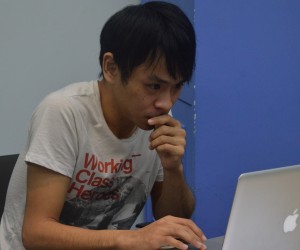
F-Secure recently had a Hackathon in Malaysia, with the grand prize being a dinner with Miko Hyppönen. Miko is sort of like the Mick Jagger of Computer Security, Miko also made international news in 2011, when he tracked down and visited the authors of the first PC virus in history, Brain.A. Hyppönen produced a documentary of the event. The documentary was published on YouTube.
The winner of the Hackathon was Tan Kok Boon (pic) who stole the spotlight with his groundbreaking application which allows users to monitor and prevent threats using F-Secure’s World Map Interface. Tan won the award for ‘ The Most Innovative Application’ and the award for ‘The Best Overall Performance’. Also notice from the picture, what device was the winner of the Hackathon using to code? It’s a MAC!
Which just goes to show, the OS of your laptop is almost irrelevant now–and pretty soon the OS of your phone will go the same way.
Anwar may have changed Malaysia, but Mark, Larry and Sergey changed the world
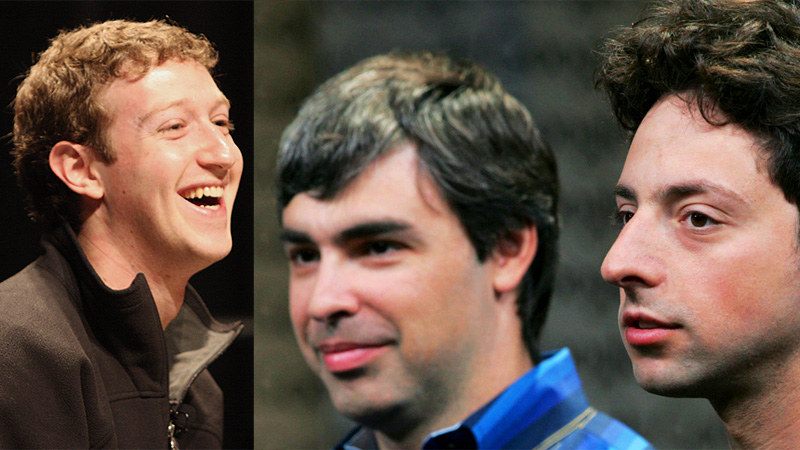
Larry Page and Sergey Brin:
Co-founders of Google, who own both the video sharing site Youtube, and the blogging service Blogger.com. Without these two free services the message from the opposition would not have reached so many Malaysians, so effectively in such a short time-span. 12 years ago, before broadband or Google, the opposition were forced to resort to pamphlets and flyers, most of which was ineffective and expensive. Without Larry and Sergey, the Opposition would have not technology to spread their message to the masses. Anwar and Co' owe more to the technology of Sergey and Larry than any amount of funds they may have obtained from any other party (foreign or domestic)Mark Zuckerberg:
Founder of Facebook, the de-facto social network for Malaysian. Facebook is so famous even my mother uses it--and I recently received a friend invite from my mother-in-law!!Facebook allowed the youtube videos and blog post from various opposition parties to be spread from friend to friend, without Facebook videos wouldn’t have gone ‘viral’. Together Facebook and Google were instrumental in allowing the opposition a platform to preach their good news in 2008–in 2013 they might just allow them to form a new government.
Can the internet go down?
I’m not just talking about just Google failing here, I’m talking about the ENTIRE INTERNET failing!
Digi begins April Fools day a bit early
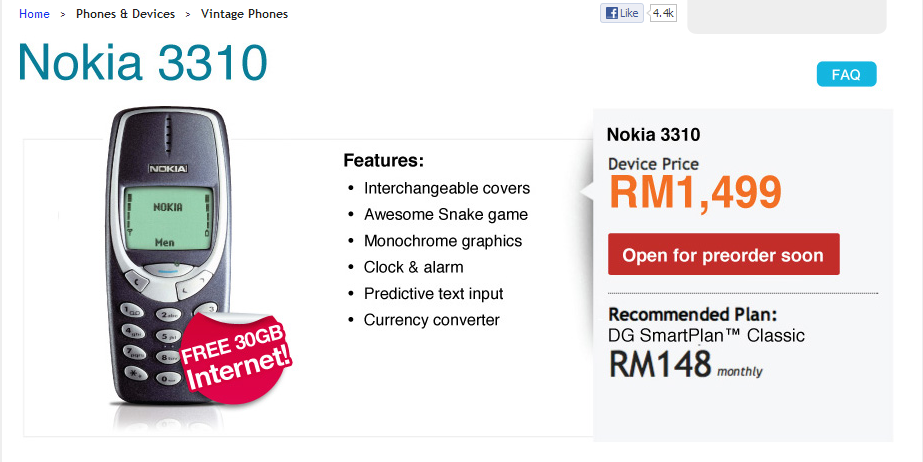
Anyway, they offered a ‘vintage’ phone offer that includes phones like the Nokia 3310, that comes with interchangeable covers, clock and alarm and best of all–an awesome snake game!! For the low low price of just Rm1499, you get the phone and 30GB of data–although that may a bit of challenge to use the Data, given that the phones pre-date not just 3G or LTE–but EDGE as well.
TOGAF Certification : Finally I’m TOGAF certified
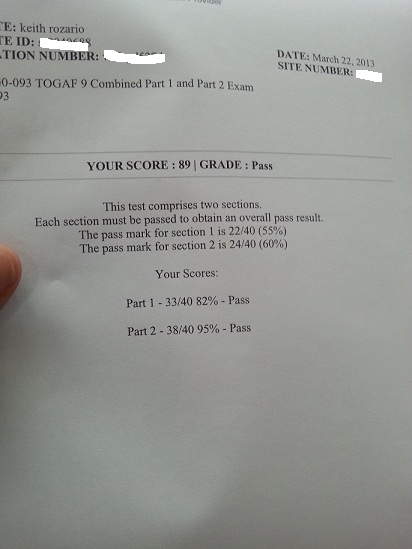
Finally after a year of procrastinating I finally sat for my TOGAF exam. I’m glad I finally did it, but I should have done it much earlier.
A lot of people wonder what TOGAF really is, TOGAF is an acronym that stands for the The Open Group Architecture Framework–yes it’s a mouthful and you’ve probably never heard of it before, but I personally believe architecture is a great place to be in these days, and ever since I moved into solution architecture (slightly more than a year ago) I’ve never regretted it.
Studying for the exam was straightforward enough, and the entire exam takes about 2.5 hours, not bad in comparison for the 4 hour PMP exam or the 3.5 hours for the CCBA. However, where TOGAF slightly differs is the fact that the certification involves two exams, aptly called part 1 and part 2.
Part 1 consist of 40 multiple choice questions, and unlike most other examinations this one has 5 possible options. In my opinion this is actually the harder of the two exams, but this one is a pre-requisite for part 2. If you fail part 1, you go home.
Part 2 consist of 8 ‘complex scenario questions’, which unlike the straightforward questions in part 1 consist of a complex scenario and 4 possible answers. However, the scenarios are quite elaborate AND take time just to digest and read –let alone answer. Once you’ve digested and truly understood the question, there’s still a matter of choosing an answer from a list of 4 possible answers–the only catch is that the answers aren’t right or wrong–there is a gradient to the answers and only the ‘fully right’ answer scores you full marks, the other ‘partially right’ answer score you fewer points. The last thing to note about part 2 is that it’s open book, which is helpful only if you know where to find the information from the 700 page TOGAF documentation.
Charities at the scale of Apple, Google or Amazon
We often talk about how where the next Apple, Google or Amazon will come from, rarely do we ask ourselves where the next Red Cross or Salvation Army would come from.
What’s even rarer is the question of how we can get our local NGO and charities to stop being Jaguh Kampungs and start being real world-changers that affect change in the areas of their focus.
Dan Pallotta thinks he has the answer, but it involves giving up some of the deeply entrenched notions we have around charities are start looking at charity in a more holistic way.
Can Malaysia produce the next Facebook or Google?
The short answer is NO.
The longer answer is HELL NO!
One of the things that pushes my buttons is when people talk about how Malaysia can produce the next Google or Facebook like as though creating a world renowned tech brand is like winning a lottery–submit enough entries and you’re bound to win it sooner or later. These people dream, and they dream a lot, from reaching 1% of the global cloud market, developing 5 companies with revenues of at least USD100 million or the most usual dream of them all–for Malaysia to produce the next Google or Facebook.
While all of the nice plushy dreams sound good to a lot of people, the reality is that Malaysia as a far away from realizing this dream as we are from winning the Football world cup–technically it is possible, but no one would be betting money on it (except possibly the Singaporean bookies).
In order to understand how a multi-billion dollar company is created, we can easily re-visit the creation stories of these companies and try to find some similarities that are common across them. So that’s what we’ll do…