Posts for: #Malaysia

Maxis Forum needs an upgrade

Yesterday I Googled something about maxis that took me to a forum.maxis.com.my link. Unfortunately, Firefox wasn’t happy with Maxis, because I got the following screen:

SSL V3 on maxis forum

Firefox is the first of the mainstream browsers to end support of SSLv3, ever since Poodle was published. For those of you who aren’t keeping tabs of security issues–Poodle was a big vulnerability discovered in the 2nd half of 2014, that affected the SSLv3 protocol.

[Read more]

Malaysian Government Hacked Environmental website?

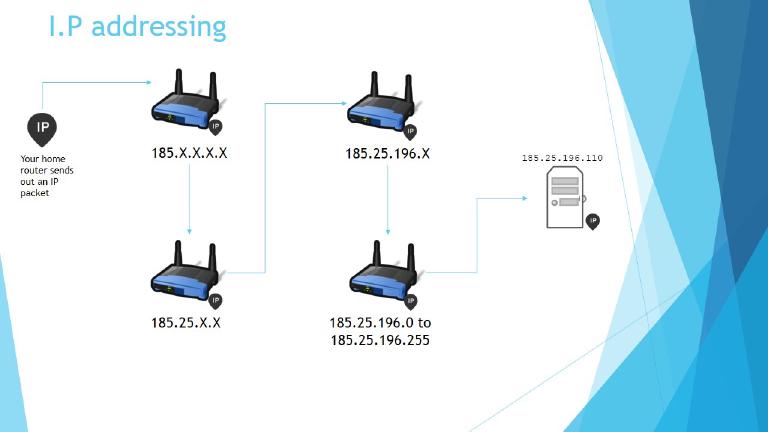
How IP addressing works

Environment News Service, an environmental focused news website this week accused Malaysian government hackers of attacking it after it ran a story implicating Sarawak governor Tun Abdul Taib Mahmud of corruption and graft. As a result, the site was down for 2-hours, before the site manage to re-gain control.

“The attack on our site came from a Malaysian government entity as identified by their IP address,” Sunny Lewis, editor-in-chief of Environment News Service (ENS)

But what exactly is an IP address, and how did ENS identify it?

Let me explain.

[Read more]

ATM Hacks are so bloody boring

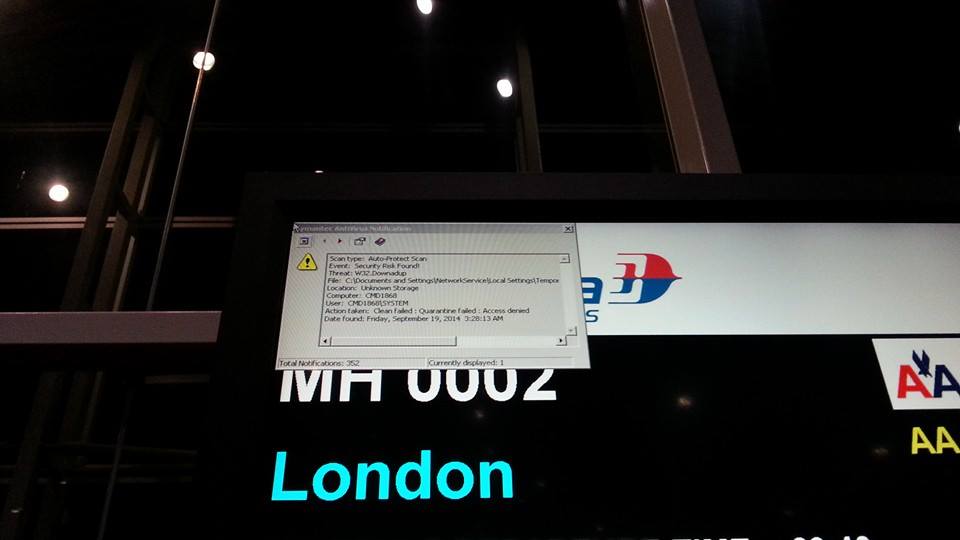
KLIA computer infected with Virus

Last week, while I was flying from KL to London, I noticed a strange anomaly on the screen of the boarding gate at KLIA. Closer inspection revealed that it was an anti-virus warning that signaled the computer had been infected by a Virus (almost 2 days ago!!). As a techie, I quickly deduced 3 things from the screen.

One, the computer was running Windows, and probably an outdated version of Windows. Two, the computer had been infected with ConfickerConficker was a pretty infamous threat, back in 2008!! And yet, here we are, at Malaysia’s most prestigious airport, and we have a computer infected by a virus that pre-dates the iPhone 3G. Three, the computer is probably part of a larger network, and never gets patched or updated–probably. If it were patched, it wouldn’t be infected with a ol’ grandmother of a virus.

As an added bonus–I could easily see the user of the system. That’s a delicious bit of information for any hacker to have.

Heaven forbid, the virus on the computer screen at KLIA not spread to something important–like control tower or Sky Train controls.

These days, everything is a computer. Your phone is a computer, your watch will one day be a computer, so too is your car. But when was the last time you patched and updated these systems? When was the last time you updated the firmware on your router–or even when was the last time you updated the software on your laptop? Some of you probably haven’t done this before–I’m looking at you Android JellyBean and iOS5 users.

So the display screens at the airport are computers–but so are the Automated Teller Machines (ATMs), and trust me when I say this, some of them run on windows….gasp!!

[Read more]

MyProcurement: All government tenders in one Excel file

MyProcurement

I've updated this post on 31-Mar-2015, to incorporate the latest changes, and to provide more up to data info on the procurement database. Left everything else in tact.
Happy birthday Malaysia!! Just how awesome is our country, that we celebrate an Independence Day AND a Malaysia Day, not to mention 2 New years day, (or 3 if you count Awal Muharram).

So on that note, I decided to use my IT skills for the good of the country.

To be honest, my IT skills have never been up to par, my day job is more managing/planning/documenting than actual execution of ‘real’ IT work. But it was good for me to dust of the ol’ programming fingers and learn Python to grab some publicly available information and make it more accessible to the less IT centric members of society.

Since I had limited time, and sub-par skills, I decided to set my sights low, and aim to extract all the data from the Malaysian MyProcurement portal, which houses all the results of government tenders (and even direct negotiations) in one single website for easy access. The issue I had with the portal though, was that it only displayed 10 records at a time–from it’s 10,000+ record archive, so there was no way to develop insights into the data from the portal directly, you had to extract it out, but the portal provider did not provide a raw data dump to do this.

So I wrote a simple Python script to extract all the data, and prettified the data in Excel offline. The result is a rather mixed one.

I was happy that I could at least see which Ministeries or Government departments gave out the most contracts, and what the values of those contracts were. All in all, the excel spreadsheet has more than 10,000 tenders with a cumulative value of RM35 billion worth of contracts going back to 2009. The data allowed me to figure out which Ministry gave out the most contracts, the contracts with the highest and lowest value (including one for Rm0.00, and one for just Rm96.00). All in all it was quite informative.
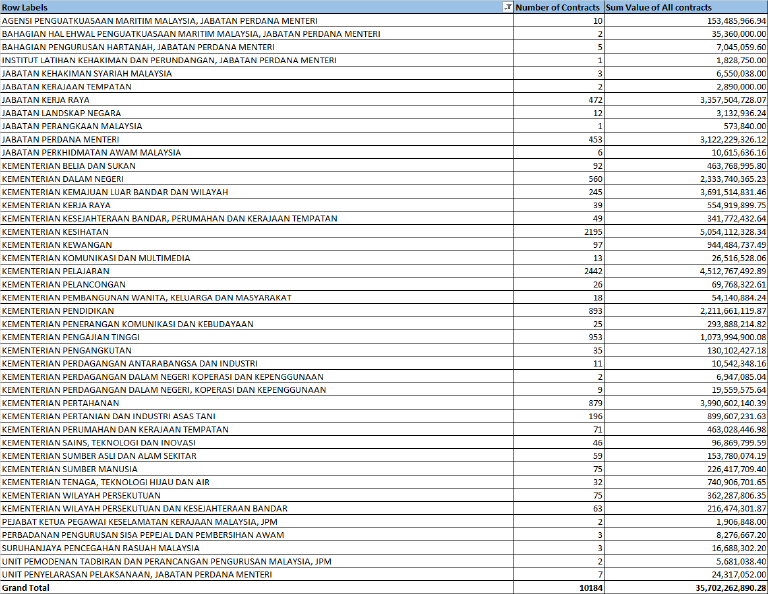

Results_by_ministry

[Read more]

Is Malaysia’s Broadband slow–no it isn’t.

Broadband_speed_klang_malaysia

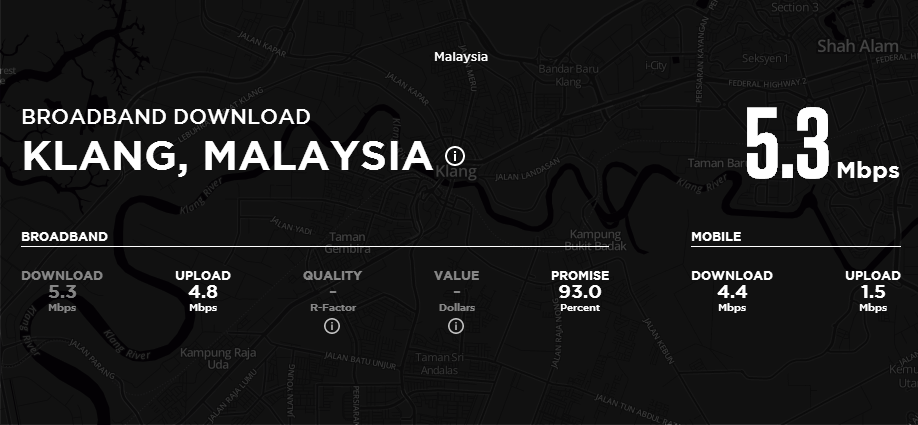
Recently KiniBiz did a piece on Malaysian broadband speeds, and once again the hoopla about how Malaysian broadband speeds are slow arose. Kinibiz quoted an article from Asean DNA which stated that the average broadband speed in Malaysia was just 5.5 Mbps, while Thailand, Vietnam and Singapore had speeds that were double that (or more!)

The report however was inaccurate, and I think there’s a need to address the hoopla, because this happens often. There was a report couple months back that said Cambodia had faster speeds than Malaysia, and I wrote a post addressing that. This time I think, we have to really go into the data and find out what exactly is going on.

So let’s start at the source of this data.

The data was built from billions of download test conducted by users throughout the world on speedtest.net (a website that allows users to test the speed of their internet connection). This dataset is HUGE!, one of the biggest I’ve seen and definitely the biggest I’ve had the pleasure to play around with. Just one file in the set had more than 33 Million rows and weighed in at more than 3.5GB.It took me some time and lots of googling just to figure out how to deal with a csv file this large. Fortunately, there’s LogParser, but we’ll skip that tutorial for now and focus on the juicy details of data.

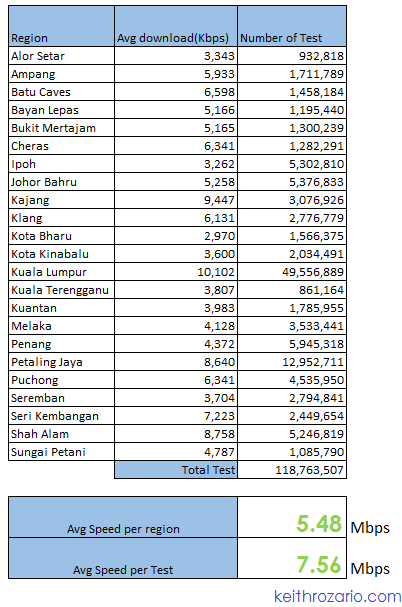
The number reported by Asean DNA is wrong. The average internet speed in Malaysia isn’t 5.5Mbps, it’s more like 7.5Mbps.

5.5 Mbps was obtained by averaging the speed across the regions of Malaysia (Kl, Alor Setar, Klang..etc) rather than by averaging the speed across all the test conducted by Malaysian users. In short, Asean DNA placed equal emphasis on Kuala Terengganu and Kuala Lumpur, although Kuala Lumpur had 50 times more test conducted. It would be like calculating GDP per state, rather than GDP per capita. The real per capita download speed in Malaysia is 7.5Mbps, rather than 5.5Mbps (if you limit yourself to just data from 2014).

Here’s the breakdown. You can download the file from netindex.com or just use an extract I created with just the Malaysian data–it took some time to do this so leave a Thank you in the comments if you downloaded the data.

Average-speed-internet-Malaysia

[Read more]

3 Ways to watch Netflix from Malaysia

Netflix is awesome. I watch it everyday, and while the selection is dated–it’s still pretty good.

If you needed proof for just how good it is–32% of all internet traffic in the US, belongs to Netflix. There’s two problems though. First, it isn’t free, and cost about Rm30 month. Not really and issue since Rm30 on Netflix gets you a lot more content than the RM100+ you spend on Astro.

The second problem is that it’s not available in Malaysia. So even if you were willing to pay the cash, you couldn’t get Netflix streamed to your home–until now that is. So here’s 3 ways to stream Netflix, BBC iPlayer and even DramaFever (for the k-drama fans out there) to your home in Malaysia.

[Read more]

My Issue with WPWebHost: Bad Support

WPWebHost-Logo

Last weekend I had an issue with my hosting provider, WPWebHost.

I switched to WPWebHost 2 years ago, and recommended them because they promised wordpress hosting at an affordable rate. Wordpress hosting is where the hosting provider would support wordpress specific features, e.g. help troubleshoot plugin and theme issues, perform nightly backups, and offer ‘higher availability’ for Wordpress sites. If you’re still wondering what Wordpress is, take a look at one of my previous post.

My latest experience with WPWebHost has left me wondering if indeed this was actually Wordpress hosting or just regular hosting in disguise. I’m now wondering if I should stay with them.

Was my server really getting the 99% uptime promised by WPWebHost? Nope. Did I get the Wordpress Specific support that help identify theme and plugin issues? Nope. Does WPWebhost cost more than regular hosting from other providers like GoDaddy, Dreamhost and my previous provider NearlyFreeSpeech? Yup. So why I am still with them? Read more to find out.

Below is the full un-redacted transcript of my email correspondence with WPWebhost–I’ve left out the customer service agents name because I believe they have a right to privacy. However, nearly every time I sent an email, a different rep would respond making the whole conversation very messy and difficult to keep track off. Some emails were left out to simplify the flow.

[Read more]

How many samples are enough to build the Kidex highway?

There’s a highway they want to build from Damansara to Puchong–called Kidex, and just like any other highway before, people are understandably worried about the construction. This excerpt from the KL-Chronicle details the causes of anxiety:

[box icon=“chat”]Kidex will be constructed over heavily built-up residential areas in Petaling Jaya and will pass very close to schools, houses and places of worship. It will pass just 5m away from two schools – Bukit Bintang Boys Secondary School and Sri Petaling Primary School. Its distance from the Tun Abdul Aziz Mosque in Section 14 is listed as 7m and from St Paul’s Church as 18m. Houses in parts of Sections 2, 4, 7 and 8 will be just 10m from the highway

And so, when Kidex had their townhall last week, a group of protesters showed up to voice their displeasure–as should be allowed in a democratic society. Kidex claimed they had conducted a survey that proved that the majority of the people wanted the highway, this was hotly contested by the Say No to Kidex committee, who contended that the survey wasn’t ‘authentic’.

The video below (from Malaysiakini) has a great interview with the secretary of the Say No to Kidex committee outlining their points of contention on the survey by Kidex. (starts at 1:10)

Here's the seven points raised by the Say No to Kidex committee.
1. The initial Kidex survey of 300 respondents--of which 73.4% were agreeable to the building of the highway. 2. The Say No to Kidex committee did their own survey on 20 different locations, including the Mosque, Schools, and the resident associations of the areas affected by the highway. 3. Say No to Kidex can't comment on how many people they've engaged but can confirm it was more than 300. 4.Hence the public perception of the initial Kidex survey is negative. 5.The list of the initial 300 respondents has not been shared--as it was confidential. 6.The survey was conducted by a Ph.D in statistics, but this survey itself was funded by Kidex. 7.The next survey as planned by Kidex would have 2000 respondents.
Now let's take this apart one by one, because there is some maths here is quite foreign to most--this is the world of probability and statistics.
[Read more]

Local broadband speeds slower than Cambodia: Why it doesn’t matter

Broadband_speed_klang_malaysia

I drive a Prius--it's a magnificent car, and if you think otherwise just ask me about the mileage.

But when I tell people I drive a Prius, I get a sneer and look that suggest I must be a bumbling idiot, you know the one where their face wrinkles up near the nose. People ask the usual mileage questions (5Liters/100km if you’re curious), and make some oft-remark about the design–but then they end with the question that’s really a statement–isn’t it slow?

The Prius can easily top 110km/hour and still get better mileage than the much smaller Ford Fiesta. There isn’t a single highway in this country where you can legally do more than 110km/hours and hence  any car that can do 110km/hour can’t be slow.

So why is it, that people make such a fuss that an Ookla study concluded that our average broadband speed is slower than Cambodia–when the average of 5.48Mbits/second is still fast enough for every online service imaginable.

I’m a tech geek, and I’m happy with my 5Mbps connection from Unifi.

At 5Mbps, I can download content faster than I can watch it–anything faster is excessive.I can watch Netflix in HD (maybe not 1080p, but good enough), I can watch youtube without lags and I can listen to any podcast, radio channel or spotify without a hitch.

And I wouldn’t enjoy these services more even if I had a 10Mbps or 100Mbps connection. Trust me 5Mbps is fine.

So what’s the big deal with the connection speeds, that our friends over at the MCMC had to release an official statement. There are some issues with broadband in Malaysia, but speed isn’t one of them. Here are the top 4 things we can do to improve broadband in Malaysia which doesn’t include speed.

[Read more]

Trust the science: Why mining pool water is safe to drink

Trust the Science on Water

Do a quick experiment:
  1. Fill a glass half-full with water
  2. Drop a couple of ice-cubes into the glass
  3. Measure the water level before the ice melts
  4. Measure the water level after the ice melts

Now compare the water level before and after the ice melted, and you’ll find them to be the same. So if melting ice doesn’t increase the water level in your glass–why do melting ice-caps raise the sea-levels of the earth?

[Read more]