Posts for: #Malaysia

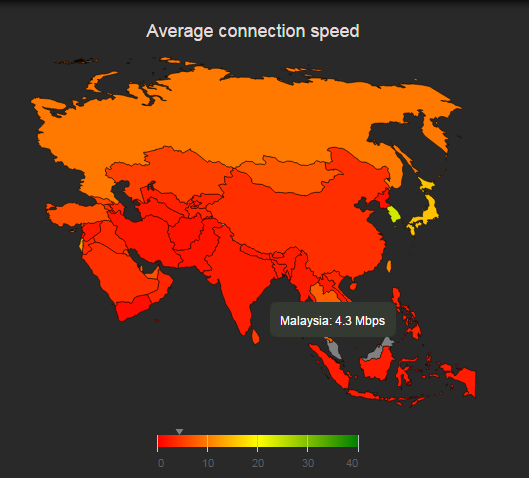
For the FINAL time, Malaysian internet speeds are NOT slow.

Average Internet Speeds

First off, apologies for the lack of content on the blog. I’ve been really busy at work these past few months, and content is slow moving. For instance, the previous post was a review of a router, that I tested for 4 weeks, and returned to the supplier more than a week ago–and the post only went up yesterday. To that end, my decision is to churn out my thoughts just ‘straight from the gut’ and not give this posts the usual research I typically do. Hope my regular readers will forgive the tardiness.

[Read more]

The day the internet stood still–AGAIN!

There was a time when the internet was young, just a little fledgling network, an academic toy used only by computer scientist to try out theoretical concepts. Contrary to popular belief the internet wasn’t created to withstand a nuclear war(although it can), instead it was created to address a very serious engineering question–how to connect together different computers with different operating systems and different commands? The answer to that question stumped many brilliant people, in the late 60’s and early 70’s, computers were Gods of their domain, stand-alone machines with ‘slaves’ like disk-drives and monitors, if you hooked up a computer to another computer, they wouldn’t know what to do–there’s a chinese saying about one mountain can only have one dragon, computers in those days were exactly like that.

[Read more]

The technological effects of SOSMA and POTA

The new Prevention of Terrorism Act (POTA) in Malaysia should not be considered in isolation but rather in the context of the 6 other anti-terrorism Bills that were concurrently proposed. All of these new laws, will almost certainly come into effect, thanks to the whip system employed by the ruling party. Yet the laws violate fundamental human rights, such as a right to fair trial and right to personal privacy.

I’m particularly worried about the amendments to the Security Offenses Special Measures Act (SOSMA), an amendment that has slipped under the radar simply because its been out-done by harsher changes to the sedition act, and the new POTA.

The original SOSMA had granted Law Enforcement powers to intercept and store any kind of communication, including digital communications, without any judicial oversight.  Police Officers ‘not below the rank of SuperIntendants’ could wiretap any communications if the ‘felt’ there was need to do so, without obtaining any warrant. Section 24 of the act further stipulated, that law enforcement did not have to reveal how they obtained such information and could not be compelled to do so under the law, which acts as blank cheque to the police and other investigative bodies to utilize any and all manner of surveillance and intelligence gathering, regardless of their legality of their methods, since no oversight can be carried out on their methods.

The amendment to SOSMA, further enhances existing powers to allow for any evidence “howsoever obtained, whether before of after a person has been charged” to be admissible in a court of law. Which isn’t a big jump from where we were, but making this statement explicit in the act, leads me to only one conclusion.

Our legislators have granted such a broad powers to the Police and the executive branch of government, that they now can intercept, and store communications of millions of Malaysians, hence the next logical step would be state-wide bulk surveillance. In light of what the NSA and GCHQ have already done, SOSMA would make it perfectly legal for Malaysian authorities to execute identical surveillance programs locally and have all the evidence generated under such program be admissible in a court of law without ever revealing how the evidence was obtained.

Think about it, on the one hand, the Government amends Sosma to allow it to collect just about anything as evidence without any Judicial oversight that might ‘slow down the process’, and on the other hand it needs POTA to detain ’terrorist’ without a trial because its hard to come by evidence. It doesn’t make any sense, what’s the point of creating POTA if you’ve already removed all the barriers to collecting evidence, and what’s the point of SOSMA if you already have the powers to detain someone without any evidence.

It would seem to me, that by allowing Government surveillance of any kind, and by allowing detention without trial, we’re creeping into a world where the Government can intercept all your communications to learn about what you’re thinking and doing–and then detain you without any justification. That’s a world even Stalin would envy.

I know I’m a tin-foil hat wearing conspiracy nut, and I know I’m on an extreme edge when it comes to political and social views—not many Malaysians agree with me on many things. Still…I think that if you look at the acts in totality, place it in context of the current trends of Government surveillance across the world, and consider that our government has a track record of deploying spyware in Malaysia, seems perfectly reasonably to me, to conclude that our government wants to run a state-sponsored bulk-surveillance operations in Malaysia.
[Read more]

The one reason you should oppose the TPP

img_20150507_095640

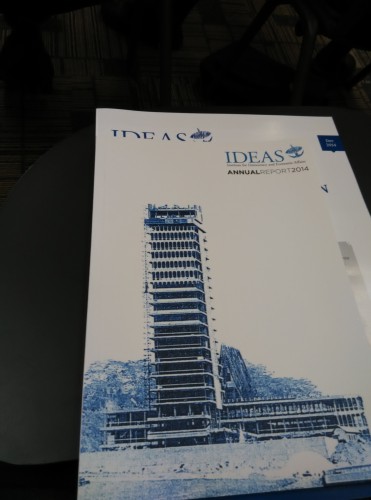
Today I attended an Institute for Democracy and Economic Affairs (IDEAS) event about the TPP. Among the panel members, included Michael Froman, the US trade representative and chief advisor to President Obama on issues of International Trade and Investment. (big shot!!)

For those you don’t know, the Trans-Pacific Partnership(TPP) agreement is a trade deal between 12 countries including Malaysia and America whose main objective is to balance out the power and influence China has over the region. But the TPP has been opposed by many NGOs and special interest groups, for good reason–it’s secret. The TPP has garnered such a bad reputation, it’s sort of like the Justin Bieber of trade agreements, everyone knows about it, but nobody likes it.

The event went on for a good 40 minutes, before your friendly neighbourhood tech blogger got a hold of the mic to ask about the secrecy of the trade agreement.Prior to that everyone was talking about Bumi Policies,Price of Medicine and impacts to SMEs. I really didn’t understand why no one spoke about the tremendous secrecy surrounding the talks and how the secrecy itself is fundamentally undemocratic and bad enough for Malaysians to reject the agreement.

This secrecy is the one reason every Malaysian should oppose the TPP. Everything else is moot, because we can’t confirm the documents we’ve seen until it’s made publicly available to the citizens of the countries negotiating the deal. Would you sign a housing loan agreement without the ability to first read the contract? Yet, here with the TPP we have a legally binding 29-chapter multi-lateral agreement that very few people have seen, but will impact all Malaysians once signed. How do we know the prices of medicines are going up? Oh that’s right, we read it from Wikileaks …. must definitely be true then. Sorry let’s move on.

[Read more]

Should an IP address be used to Identify someone?

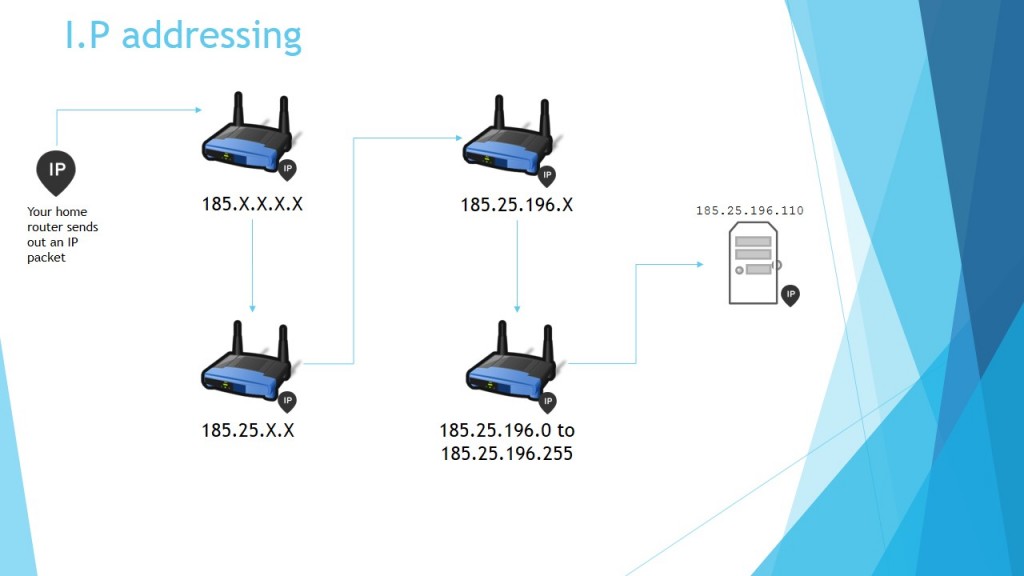
How IP addressing works

Recently a court in Malaysia ruled that the newly amended evidence act could presume an IP address would uniquely identify a user of a network, and in the case of an Internet IP address, enough to tie an IP to the individual subscriber. In other words if the authorities ever found out that ‘your’ IP address was behind a post, then you’d have to prove it wasn’t you rather than they having to prove it was.

In Tong Seak Kan & Anor v Loke Ah Kin & Anor [2014] 6 CLJ 904, the Plaintiffs initiated an action for cyberspace defamation against the 1st Defendant.   In tracing the perpetrator, who had posted defamatory statements on two Google Blogspot websites, the Plaintiffs filed an action called a John Doe action in the Superior Court of California.   In compliance with the court order, Google traced the blogs to two IP (Internet Protocol) addresses which were revealed by Telekom Malaysia Bhd to be IP addresses belonging to the 1st Defendant’s account.

Bread & Kaya: Malaysian cyberlaw cases in 2014

Upon further reading of the post on DigitalNewsAsia, my non-lawyer mind got the feeling it didn't end well for Loke Ah Kin & Anor as the court decided they were guily of defamation based on a flimsy piece of evidence like the IP address of the user who posted blogspot.

I’m uncomfortable that a court of law could find someone guilty based on something as trivial as an IP address, when other courts around the world have ruled that IP addresses are insufficient for this purpose.

[Read more]

FireEye: Group spied on Malaysia for 10 years

Spying Program

The team over at the FireEye threat intelligence published a special report(pdf) detailing an long running (and still on-going) cyber-espionage operation that has targeted multiple entities in ASEAN countries, including Malaysia. The program was reported to be running for more than a decade, and the sustained period coupled with the list of targets the program had, led FireEye to believe it to be a state-sponsored activity, as no other other type of organization would be able to afford such a professionally run program, operated for such a long period of time with no discernible source of income.

The group were nicknamed APT30, an abbreviation for Advanced Persistent Threat number 30 (I'm guessing the 30 part, because FireEye have other APTs on their github page). APT is a cyber-security term coined to identify an attacker that has both the capability and persistence to target specific entities up until they eventually break, and then continue to suck information from their victims for a significant amount of time. Basically there are script kiddies, hackers and then the 'Advanced Persistent Threats', APTs are a class above the rest.

APT30 operated a suite of tools including back-doors, and command and control software that were given catchy names like Backspace, NetEagle, Flashflood and ShipShape. The tools demonstrated a fair amount of sophistication in the way the functioned, but what really impressed the FireEye team was the level of professionalism that the coders exhibited, the malware had a well defined version control system, automated tools to manage many of the operational task and even the functionality that allowed for the system to be operated 24/7 by a team working on shifts, with one window requesting the operator to enter their 'attendant code'. I wouldn't be surprised if the system even calculated yearly increments, and provided KPI reports in the background.

[Read more]

MDeC Private Meeting with ODI

Mdec-Logo

Earlier this week I attended a MDeC organized private meeting with Richard Stirling from the Open Data Institute (ODI).The ODI is an institution that hopes to promote the ‘open data’ culture, and founded by a giant of the Tech world, Sir Tim Berners-Lee, which you might remember for inventing a small little thing we call the world wide web.

The meeting was attended by just a handful of folks, some of whom I recognized from a previous Seatti conference I attended, with the audience and topic focus on Open Data (and Big Data) in Malaysia.

The conversation was really good, and broadly speaking touched on 3 key topics. Most of this post is a re-hash from my failing and aged memory, but there's a clearer version of the minutes here from the amazing people of Sinar Malaysia if you're interested in the specifics.

[Read more]

All Air Pollutant Index (API) readings in Malaysia for 2014

I've stopped scrapping the API readings for Malaysia, as the MET department have stopped publishing historical readings on their website.

The data has been updated to include all API readings up to 01-Sept-2015, and then from 28-Sep-2015 to 03-Oct-2015. The ‘gap’ in the dataset is because the MET department changed their webpage and removed the legacy data before I could get my hands on them. I’ve written to them for it, hopefully we get a useful response. For now though, there’s 24 months of data from Aug-2013 to Oct-2015 in the dataset. enjoy!

To get all the readings by region in a single delimited file, click this link, I apologize for the messiness of the data and the files, I should tidy them up by the end of the month. Contact me directly for anything specific.

Keith

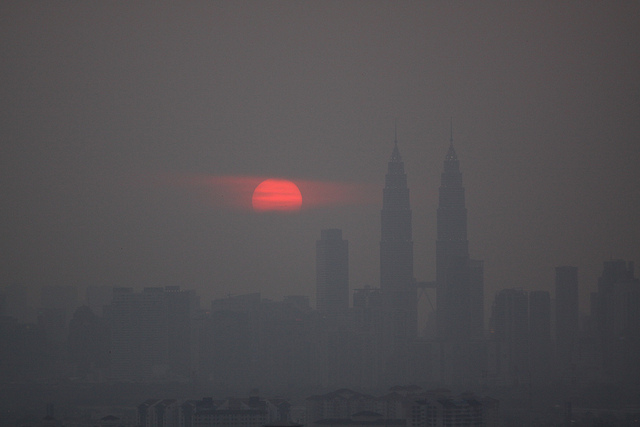
Haze Malaysia

Once again, your friendly neighbourhood techie has used this powers for the good of the country.

Last September, I scrapped all the procurement data from the Malaysian’s Government MyProcurement website, this time I scrapped all the Air Pollutant Index (API) readings from the Department of Environment (DOE) website.

First off, Kudos to the DOE for keeping such great tabs on the data–overall the DOE publishes one API reading for every hour or every day across 52 locations in Malaysians. Just to put the sheer volume of data into perspective, for just one year that’s:

52 locations x 1 reading/hour x 24 hours/day x 365 days/year  = 455,520 readings.

[Read more]

What happened in the MAS hack. All questions answered, one question asked.

Real-Life DDOS attack

Late in January the Malaysian Airlines website was ‘supposedly’ hacked by Lizard Squad. You  might remember Lizard Squad as the guys who ‘hacked’ the XBox and Play Station network over the Christmas holidays, and I’m using a lot of ‘quotes’ here because Lizard Squad didn’t really ‘hack’ XBox One or Playstation, they merely DDOS-ed the services.

What is DDOS-ed I hear you say?

A DDOS attack is one where you flood a server with so much web traffic, that the server is no longer able to serve content to legitimate customers. Imagine if you got 100 friends, and decided to create some havoc at the McDonalds near your home. You and your friends would line-up at the counter, and you'd place an order for 100 Big Macs, 25 Cokes and 1 Apple Pie... only to cancel your order after the cashier typed in it. The next friend in the que would do the same thing--over and over again. Even though there would be legitimate customers at this McDonalds trying to buy some food, chances are they'd either have to wait a very long time to get their food, or they'd give up entirely.

Essentially you’ve denied McDonalds their chance to serve their customers–or you’ve just launched a Denial of Service (DOS) attack–the extra D in DDOS, just stands for distributed.

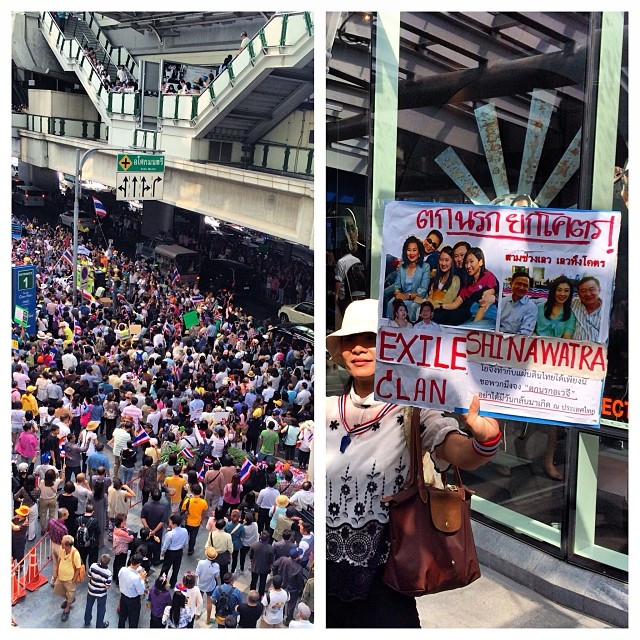
Real-Life DDOS happen all the time–what do you think the Thai Protestors were doing to Airports in 2008?

But why is this important?

It isn't. DOS attacks are pretty common--but Lizard Squad attacked the Play Station Network,and XBOX with ulterior motives. Even though they claimed to do it in the name of 'security awareness', they only stopped their DDOS attack because Kim Dotcom offered them USD300k worth of services on his Mega website. Kim Dotcom is another controversial character, but to cover him in this article would be too large a digression--so if you want to know more about him, just Google it.

The REAL motive of the Lizard Squad DOS attack became apparent some days later when they started to offer their DDOS attack as a service to paying customers. Essentially you could go online and buy their services to attack a target–maybe a competitor company, a personal blog of someone you don’t like, or just about anything. Lizard Squad were hawking their services to anyone with cash.

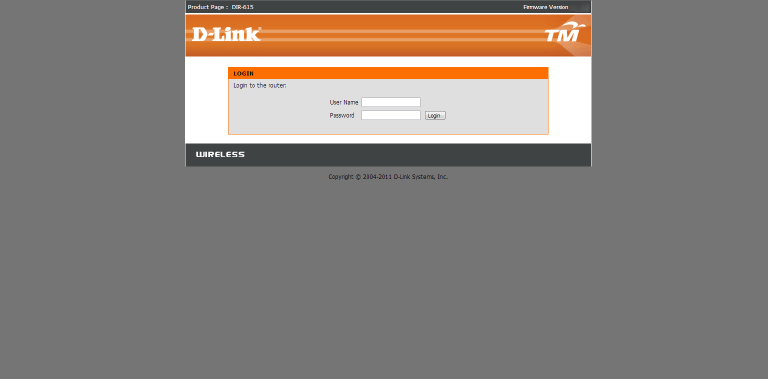
Some suspected that Lizard Squad were running this large DDOS attack using nothing more than home routers–similar to the ones that UniFi provides and that I demonstrated could be hacked trivially over an internet connection.

[Read more]