Posts for: #Malaysia

Censoring Innocence of Muslims in Malaysia

The Malaysian government has requested that Google take down the video Innocence of Muslims, and Google has since complied. As of today, anyone trying to access the clip from a Malaysian IP address would see a screen that reads “This content is not available in your country due to a legal complaint. Sorry about that.”

The clip is most definitely offensive, and demeaning but what is quite obviously isn’t is–serious. The first thing anyone notices from the clip is that it’s of low quality, there are multiple versions of Malaysian Gangnam style that are made with far higher quality than the clip, yet this one particular clip has managed to create such an uproar that people have killed for it. I’m not defending the clip, or opposing it.

What I am against is Governments and Corporations coming together to censor something ‘on behalf’ of the people. What I am against is a ineffectual censorship, which instead of preventing people from viewing the clip, actually nudge them towards actively searching for it online.

In the end, we have to say that video clips don’t kill people–people kill people and  in my view the censoring of the clip is both ridiculously short-sighted and terribly ineffective.

[Read more]

My Faulty Samsung Galaxy S3 has returned

Before my recent trip to Australia, my brand new Samsung Galaxy S3 failed on me. The speaker just went kaput.

Well not really kaput, but there was absolutely no sound coming out of it. Needless to say I was a bit frustrated, annoyed and just downright disappointed. This was an expensive top of the line phone, and it’s speakers shouldn’t be failing after barely 4 months.

So I called up Maxis and reported my predicament, and Maxis said I had two options, either send it back to them or send it directly to Samsung. I figured I might as well cut out the middleman and send the phone directly to Samsung.

So after a few calls and some planning, I found out that Samsung normal fix rate was 3 working days. Which wasn’t good enough for me as I had to fly off by the next day (shit happens), so I survived in Australia with a faulty phone whose alarm wasn’t working. Fortunately, my wife’s Iphone which I bought for her 2 years ago was still working perfectly.

After arriving back to Malaysia I went straight to the Samsung Service center in Digital Mall USJ (first floor) on a Saturday. The told me I’d be able to collect the phone within 3 working days, which worked out to Wednesday.

However, I got a call the following Tuesday afternoon informing me the phone was repaired and I could collect it directly from the service center. So I headed there I collected my now-working phone. So now my Galaxy S3 is working perfectly again.

Samsung took just 2 days to fix my faulty speaker :).

[Read more]

How to Port Forward your Unifi Dlink Dir-615 router

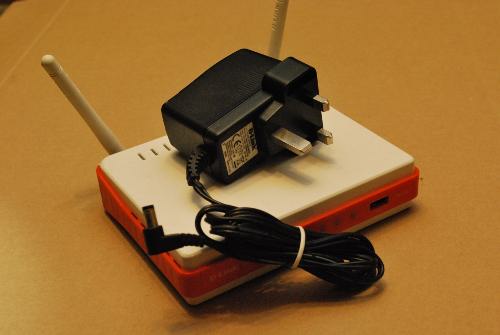
dir-615

Port Forwarding is a really simple concept, but a very important step you need to take if you want to remotely access the devices you have at home. For instance, if you have a Unifi connection connected to an always on desktop and you wanted to Remotely access your windows machine, you’d need to perform port forwarding on your router.

Similarly if you’ve just installed a new IP camera in your home, and want to access the camera while you’re on the road you’ll need to perform port forwarding on your router.

Port forwarding is a neccessary step in order to access your home devices from outside your home. If you want to access anything in your home remotely you’ll need to configure some sort of Port Forwarding, and here’s the why are how.

Data Coverage Down Under

I’ve just come back from a fantastic 2 week long vacation in Australia, and I absolutely loved it. The weather was a bit cold for my Malaysian body (especially in blue mountains), but overall the holiday was a well deserved break from nearly 8 months of non-stop work ;).

The one thing I did notice about Australia though, was that data charges were quite exorbitant. I stayed at various Youth Hostel throughout Queensland and NSW and was surprised that they charged nearly AUD7 per day for Wi-Fi connectivity. Needless to say, I wasn’t too impressed with shelling out nearly RM25 per day for something I get free from even my local mamak.

It was the same nearly everywhere else, even their coffee joints and cafes didn’t offer free Wi-Fi, one explanation I came across was that Australia was geographically very distant from the rest of the world AND it was sparsely populated, so the cost of supplying connectivity to the country was very high. Therefore, these cost were reflected in the amount users paid to go online. In Malaysia, Tune Talk offers 5 Sen/MB, which works out to roughly Rm25 for the same 500MB of data I got from Optus, Digi offers a 600MB for an RM75. Well below the nearly Rm100 I spent on my Optus Pre-paid. So instead of subscribing to the local Wi-Fi, I decided to spring for a mobile data package, in this case the Optus Pre-paid plan that cost AUD30, with that I got unlimited minutes, 250 minutes to landlines, unlimited sms and 500 MB of data. That’s a lot of money, considering I wasn’t bothered about the other stuff except the 500MB of data.

Evidence Act Technological Misconceptions: A response to Rocky and Fatimah

The government has finally 'relented' and now wants to 'discuss' section 114A of the Evidence act 1950. Now it's great because it proves beyond a shadow of a doubt that:
  1. The internet can be used for fantastic good.

  2. The general Malaysian public can make a difference in the governance of the country.

My website also had the pop-up banner, and according to Google Analytics, all 300+ people who visited yesterday were at least enlightened by it.

However, there are some misconceptions about the act, or more specifically misconceptions about the technology behind the internet. The only reason, I’m writing this post is because yesterday morning RockyBru posted up content by a blogger named Fatimah Zuhri, defending the act. Why on earth would a blogger defend the act is beyond me, but it became clear that her understanding of key internet concepts were way off the mark.

From a technological perspective, she was advocating from a point of ignorance, and Rocky whose a popular (or unpopular) blogger/journo only served to spread these misconceptions. I hope to point out how it is very difficult to pinpoint the origin of an anonymous or malicious post, and how shifting that burden to the ordinary citizen is unjustified.

So let’s start with the Post which you can read here, although for your sake I wouldn’t suggest it. Partial contents of the post is quoted in here as well.

[Read more]

Maxis Fibre to the Home (FFTH) : Why you shouldn’t get it

Imagine buying a house from a housing developer who insist that even after you’ve bought the house the developer will be allowed access to your downstairs bathroom. So that even after you’ve bought the house and moved in and got that nice kitchen cabinet design you’ve been eye-ing, the developer can still access your downstairs bathroom, no matter what. Worse still, the developer then decides to turn your downstairs bathroom into a public toilet.

Sound crazy right?

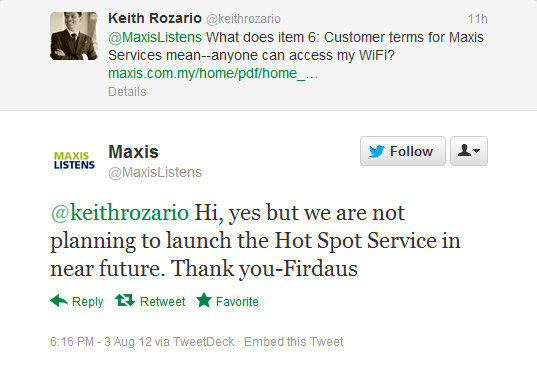
No developer would ever convince me to buy a house under such conditions, but Maxis seem to think they can push through something very similar in their Maxis Fibre to the Home (FTTH) Agreement. Before you sign up for your Maxis Home Package, you’re presented with a single page document to sign. The document basically states that you agree to the Maxis terms and conditions (T&C). A single page document sounds rather minimal, until you realize it’s a single page of 2955 words. Maxis squeezed 2955 words onto one page through a straightforward method of reducing the font size, basically making the agreement even harder to read–but you should read it, because point 6 of the Customer Terms for Maxis states:

Google: Lazada.com.my Malaysia is hosting Malware

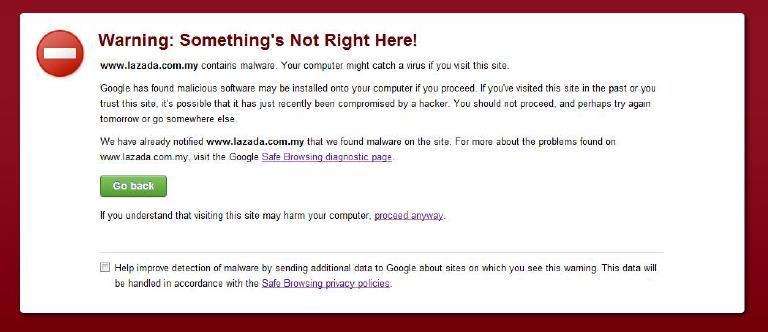
Lazada Infected by Malware Warning from Google

Lazada.com.my contains malware. Your computer might catch a virus if you visit this site. Google has found malicious software may be installed on your computer if you proceed.
WOW, Lazada Malaysia apparently has been infected with some rather nasty infection. My version of Google Chrome prompted this when I tried to visit the site today. Hope everything is alright over there in Lazada headquarters.

In fact, Google is populating it on their search results as well, must be a rather nasty one:

[Read more]

HTTP vs. HTTPs : Why SSL and TLS are important

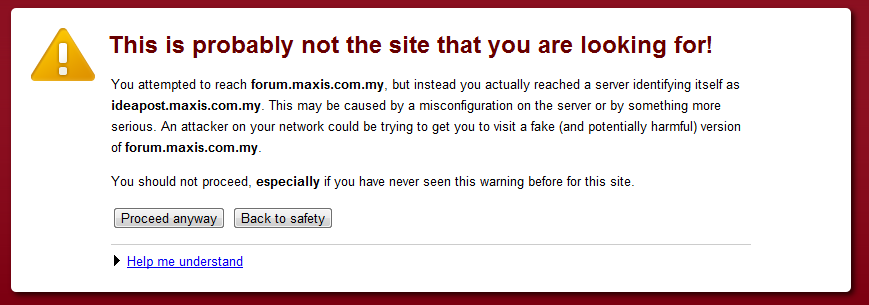
I was looking for some detail on Maxis Fibre to Home service until I came across this while trying to to access the Maxis Customer Forum online:

In the early days of the internet, all the data flowing through was done in plaintext, this meant that everything flowing on the internet was fair-game for anyone to hijack and view. It was akin to sending postcards all around, all the post-men and intermediaries could view the entire contents of your messages because it was out there in the open, no need to open sealed envelopes. So everything from your letters to your uncle Bob or your resume for a new job or even your most intimate personal letters could only be sent via postcard–anyone could read it.

There was a strong requirement however to design a mechanism to encrypt data flowing through the internet, because unless you could encrypt data, personal and credit information couldn’t (or rather shouldn’t) have been trasmitted across the internet. So it was important that someone somewhere figure out how data on the internet could be encrypted to enable things like online shopping, social networking, even simple email. So sometime in the mid-90s Netscape (the default browser at the time was Netscape Navigator), took up the gauntlet and invented SSL.

At this point, I’m also reminiscing the days when browsers were actually pay-ware rather than freeware. Remember when Netscape Navigator Gold used to cost money?

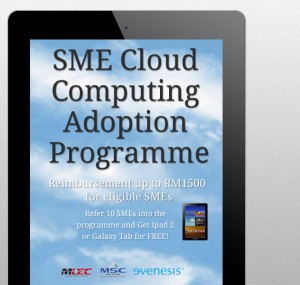
MSC Cloud Initiative : Why it’s a bridge too far

Why does Amazon–arguably the biggest cloud player in the world–choose to launch it’s Asia-Pacific Offering in Singapore rather than Malaysia? One would think that the prohibitively high prices of land in Singapore, coupled with it’s higher base cost and employee wages would make Singapore a terrible place to put up a Huge Datacenter comprising of thousands of Servers and HVAC units.

Just to compare Malaysia and Singapore, you can build data centers in Malaysia for a fraction of the cost, coupled with cheaper labor and support cost. Our subsidized power, also means that Amazon could benefit from lower electricity bills. Best of all, Malaysia and Singapore, aren’t really that far apart, so why setup shop in Singapore for something that relies on high volume and low cost? The answer is quite simple–Singapore is where the Internet is, or rather that’s where the data flows through. The internet is the information super highway, and just like any other highway the 3 most important criteria for setting up business on the internet is location, location,location.

NFC page hacked

National Feedlot Corporation Logo hacked

The guys over at the NFC can’t really catch a break. The National Feedlot Corporation have had a lot of bad luck lately, but I guess when you get an RM250 Million dollar government loan when you’re wife is a Government minister–you’ve probably already had your fair share of good luck.

With the recent arrest of Rafizi Ramli, the up and coming PKR young gun–the SGP Cyber Army decided enough was enough.

Who is Rafizi you ask? He’s the guy who debated with Khairy in the UK, he’s the guy who spearheaded the attack against the NFC, he’s the guy revealing documents about George Kent and the LRT project, and he’s the guy proposing abolishing the ridiculously high taxes Malaysians pay for cars. Yeah–all of that comes from one guy–Rafizi, and right now he’s being charged under a law no one except Bankers give a crap about.

So with his recent arrest, some hackers in his defense–decided to go on offense, and they set their eyes clearly on a big target–no not Sharizat–but the NFC website, and boy did they hack it well.