Posts for: #Keith's Favorite Post

Keith’s on BFM Talking about spyware–again!!

Keith_on_BFM_Tech_Talk

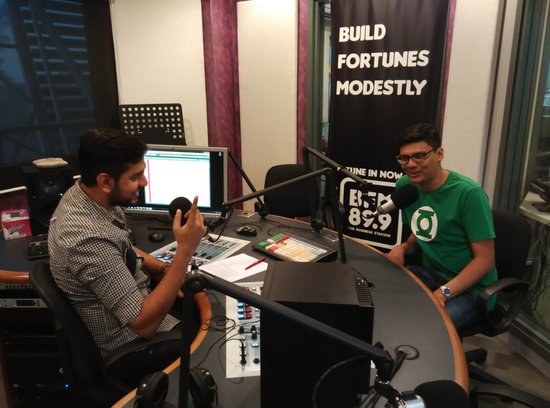
Today, I was on BFM talking about Hacking Team, the audio for which is below, and more comments and thoughts below that.

This is my last ditch attempt to get a conversation started about the use of surveillance software by the Government—and these conversations should take place a the higher (and more powerful) levels of goverment. Talking about it to myself on this blog isn’t taking it anywhere.

[]

Questions we need to ask about spyware

If you believe (as I do), that the government bought spyware, then here are some pertinent questions

Question 1: Do these government agencies actually have investigative powers?

While the police might have the legal authority to investigate someone, does the PMO, MACC or anyone else share that authority. If a government agency has no right to investigate someone, then why is it buying spyware?

The conversation should end here, as I don’t believe the PMO has any authority to use spyware, but the next question actually goes even further and ask if anyone has the legal authority to use it.

Question 2: Is spyware legal?

Installing spyware on a laptop or smartphone is far more intrusive than a regular home search, it's like having an invisible officer stationed in your house listening in on everything you say and do. It doesn't just invade the privacy of the victim, but even those that victim communicates with, shares their laptop with or even those that just happen to be nearby.

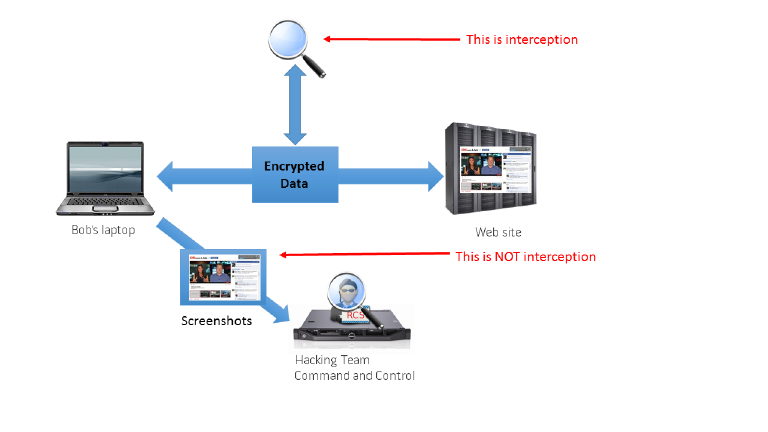
The MACC act, that governs the powers of the commission, specifically state that a the Public Prosecutor or Commissioner of the MACC can authorize the interception of communications if they ‘consider’ that the specific communication might help in an ongoing investigation. However, spyware from hacking team isn’t really ‘intercepting’ communications, because what is being communicated through the Internet is usually encrypted, Hacking team circumvents this by capturing the data before it is encrypted and then sends that captured data in a separate communication back to its control servers. Strictly speaking, this isn’t interception, its shoulder surfing on steroids.

Hacking Team Interception

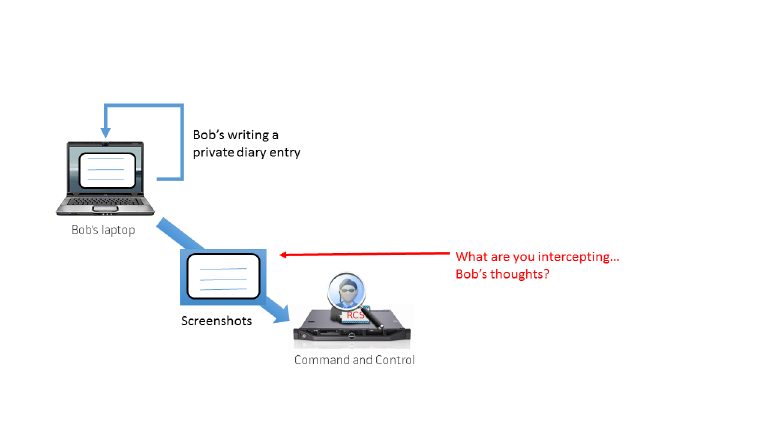
More worrying, is that the spyware might take screen shots of diary entries and notes that the victim never intended to communicate with anyone, or draft e-mail entries that they later delete are also captured by this spyware.  Obviously this falls into a different category than simple ‘interception’, but I’m not done yet.

Slide2

[]

PMO purchases of Hacking Team software

[caption id=“attachment_5373” align=“aligncenter” width=“550”]

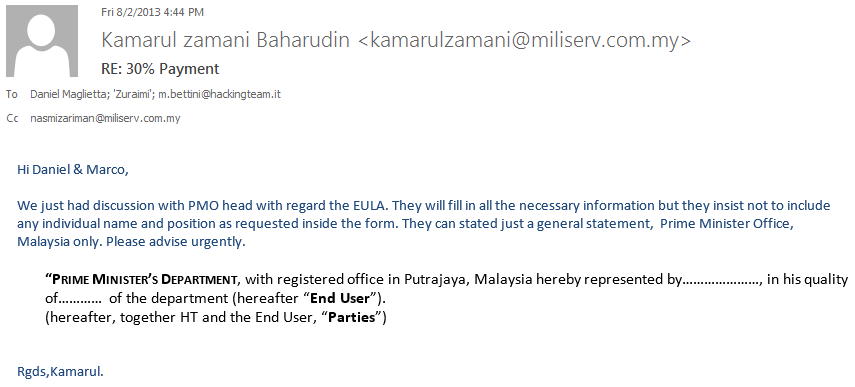
E-mail from Miliserv to Hacking team stipulating the end-customer as the Prime Ministers Department

E-mail from Miliserv to Hacking team stipulating the end-customer as the Prime Ministers Department[/caption]

The Prime Ministers Department has denied (twice!) that it has ever procured surveillance software from Hacking Team. Even though hundreds of e-mails in the leaked Hacking Team archive point to it. The latest rebuttal, Datuk Azalina distanced her Ministry from other government agencies, encouraging reporters to seek official statement directly from other agencies accused of procuring the spyware.

In the mean-time though, we’ve now learnt that the MACC has made a ‘semi’ admission that they procured the spyware, and to clear any doubts there’s more proof at the end of this post. But in-spite of this, Datuk Seri Azalina has remained silent.

To be clear, I’m not accusing anyone of anything. I’m merely reproducing what is already in the public domain, in the hopes of us taking this conversation further to address more pertinent points. We are frustratingly stuck on this issue of purchase (or lack thereof) because the Prime Ministers Department denies it bought spyware. I find it quite appalling that the Ministry would issue a simple denial without further clarification when I had furnished many documents, in other words they’ve provided an unsubstantiated denial to my substantiated claim.

So…here’s an e-mail (linked here), showing Miliserv requesting Hacking Team to register the Prime Ministers Department as the End User of the system in the Licensing agreement, and here’s another (below), showing Miliserv preparing to welcome 6 PMO staff to their headquarters in Milan for ‘advanced training’. I have removed the names of the PMO staff (red blocks) as I believe that employees shouldn’t be punished for mistakes their employers commit (but you can search for it online, it comes with passport numbers as well). Why send 6 staff to Milan for training if you didn’t buy the spyware?

[]

The Government doesn’t buy spyware–yea right!

The Government has denied buying spyware from hacking team, they really should have checked with me before issuing the statement.

Spying Program

On the 23rd of November 2015, Datuk Seri Azalina Othman Said denied that the Malaysian government had procured spyware from hacking team. In a formal response (in Parliament!!), the Minister simply stated “For your information, no such device was purchased by the Prime Minister’s Department”.

For YOUR information, dear Minister, I don’t like being lied to, and oh look there’s a flying pig by the window.Next time ask your PR guys to call me before you go setting your pants on fire.

Ok folks, here’s a step-by-step on why we can trust the hacking team leak, why there’s conclusive proof Malaysia bought this spyware, and why we should be worried about the manner in which it is being used. So let’s go.

[]

So you think English is the lingua-franca of Science…

Nanoscience center

I get annoyed when parent associations insist that the Government needs to teach science and maths in English. They argue that because English is the lingua-franca of science, teaching science in English will help students learn more effectively without needing them to translate scientific terms from the vernacular. They add that teaching Science and Maths in English is a great way to improve the standard of English in schools.

It would great if those points were true, but they’re not.

English as the Lingua franca of Science?

Firstly, English isn't the lingua-franca of Science. True, scientific journals are mainly in English and citations in most scientific literature point to English journals only, but shockingly primary and secondary school children don't read the latest publications on the higgs-boson.

Instead, what children learn in school is so dated, that their initial publications were probably in Latin or Greek, with older text going back to Arabic, Chinese or even Indian origin. The most recent ‘findings’ your children learn in physics is Quantum Physics, which is roughly a hundred years old. Even then, they aren’t reading Einstein’s original paper on the Photoelectric effect, they’re reading a textbook that sufficiently distils and simplifies it for their consumption.

In fact, a vast majority of what children learn in Form 4 physics is derived from Principia, which is a collection of 3 books by Sir Isaac Newton who wrote them in Latin. The famous rhyme that “Every action has an equal and opposite reaction” may sound nice in English, but doesn’t exist in the original text, simply because it wasn’t written in English. Going further back in history, the algebra you loved in high school derives its name from a notoriously hard to pronounce book titled “kitāb al-mukhtaṣar fī ḥisāb al-ğabr wa’l-muqābala” , the highlighted al-gabr means the reunion of broken parts, and forms the origin of the word Algebra. The book itself was written by al-khwarizmi (who is the most important mathematician you never heard of), and whose name is where we get the word Algorithm from, obviously he didn’t write his works in English.

Of course, I use these ancient examples a bit unfairly, but the fact is that your children are learning ancient science in schools. It’s not irrelevant, it’s that you have to build the foundation of scientific literacy from these ancient roots before you can tackle modern day science of the Higgs-Boson. You can’t fly before you learn how to walk.

The point is, that if these ancient text were translated into English at some point, why can’t we do the same to Bahasa, or Mandarin, or Tamil..or whatever language you want to. Isn’t it easier to translate and contextualize these century old ideas into a language the next generation is comfortable with, rather than hope they suddenly develop a love and understanding of a foreign language like English?

When you say Lingua-franca of science, in the context of what children actually learn in primary and secondary school–it isn’t English.

[]

The PM’s year end cyber-security message

From: jibby@Malaysia.gov Sent: 23 Dec 2015 To: orangbawah@Malaysia.gov Subject: Cybersecurity Year end message.

*This message is intended for all Malaysian Government servants only, do not forward without prior approval*
Greetings and Salam 1Malaysia.

I want to use this year-end as an opportunity to discuss the important topic of Cybersecurity. This year was interesting for me personally, and for all Malaysians, and we need to be aware of cybersecurity issues in order to avoid situations where some people go bat crazy over a missing pendrive, or we’re struggling to interrogate a sysadmin in Thailand.

But let’s start with a Government Linked Company, Malaysian Airlines (MAS).

In February, MAS had their website hacked by a group calling themselves Lizard Squad, which appeared at the time to be affiliated with ISIS. However, I confirmed with my pal Badghdadi that Lizard squad are in no way related to our good friends at the Caliphate, and we should continue striving to be as brave as them.

Delving deeper into the hack, revealed it to be a domain registrar hijack, and was not a result of inadequate security from MAS. Essentially MAS registered their website with a registrar, and it was that registrar which was hacked, not MAS themselves. Let that be a lesson for us all, sometimes the responsibility of security rest not just with us, but with our IT vendors as well.

Another good example of IT vendors completely messing up is Miliserv.

[]

Hackers and terrorist

[caption id=“attachment_5307” align=“aligncenter” width=“550”]

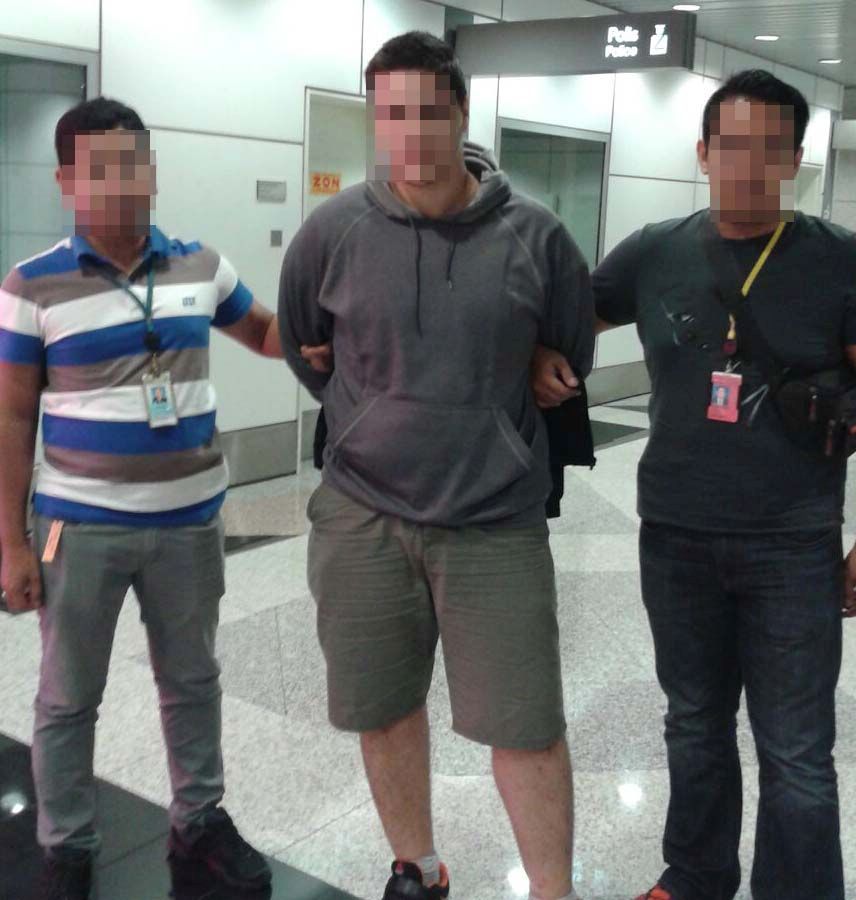
Tip to newsmenL Next time blur out the photos and names on the ID tags as well.

Pic from TheMalaysianInsider, Tip to newsmen: Next time blur out the photos and names on the ID tags as well.[/caption]

There is no greater danger of tech illiteracy, than the way we treat hackers. A society that doesn’t understand technology will view those who can manipulate it as wizards and sorcerers.

Technology sufficiently advanced is indistinguishable from magic, and to most people that bar of being ‘sufficiently advanced’ isn’t set very high.

The magic analogy is apt, even in fiction, wizards are treated either with  awe, ala Harry Potter and the muggles, or disdain ala the Salem witch trials, where ignorance bred fear, which in turn led to persecution.

Regular readers of this blog will know Kevin Mitnick, the grand-daddy of hackers, who was once rumored to be able to launch a nuclear missile by whistling into a phone. Not only was the rumor patently false, it nudged Judges in American courts to deny him a bail hearing, something guaranteed to Mitnick by the countries Federal Constitution. Prosecutors quickly learnt that if you throw around words like Hacker and Nuclear, Judges will willingly jettison constitutional protections quicker than Han Solo can dump cargo to make the jump to light speed.

In the absence of a nuclear threat, law enforcement agencies have begun using terrorism, and found it equally effective in demonizing hackers and anyone else who could do seemingly magical things with bit and bytes on a computer screen.

[]

Chip And Pin : An intro for Malaysians

In 2016, Chip and Pin will gradually be introduced in Malaysia, that means your Credit Cards now will prompt you for a PIN instead of signature during purchases. This will be a bit of a hassle, but it will be worth it,  here’s what you need to know about it and credit card transactions in general.

The 5 people you meet in card transaction
19205891971_2abaa89036_z

First off, a short primer on credit card transactions. In any business transaction, there are at least 2 actors involved, a buyer and a seller. In industry lingo we call them Merchants and Cardholders. These are important terms to remember, as we’ll use them extensively .

But a card transaction is far more complicated and involves at least 3 more actors, some of which you may not even be aware off. First, we have the party that issued the cardholder their card, the ‘Issuer’. If you have a credit card, chances are that credit card is tied to an line of credit issued by a bank, whether it’s HSBC, or Maybank, these are issuers, who have a relationship with the card holder.

Then we have the ‘Acquirer’. This is the financial institution that provides the merchant the ability to accept card transactions. Sometime this is as simple as just placing a card terminal on the merchant premise. The acquirer has a relationship with the merchant, and that’s why when you look at credit card receipts, they usually have a banks logo on them–that’s the acquirers logo.

Both the issuer and acquirer are usually banks, because credit cards deal with debt, and only registered financial institutions are authorized by law to perform such transactions (think of interest rates, and loan functions..etc)

So far, we have the Issuer that issues the card to the cardholder, and the Acquirer that provided the infrastructure to the merchant, but how do we tie all of them together. Here the final actor provides a network that connects all acquirers to all issuers, they’re called Card Schemes. You know them by their names, VISA, Mastercard, Diners, JCB, Discover..etc. The schemes provide the ability to connect acquirers and issuers, so when you go a merchant, you only ask them if they accept Master or Visa, and not worry about the specific acquiring bank. Similarly the merchant places a “Mastercard accepted” logo on their premise, because if they can accept one Mastercard, they can accept them all.

These 5 actors, the Cardholder, the Merchant, the Acquirer, the Issuer and the Scheme work seamlessly together to allow you to purchase goods and services using only a single piece of plastic we call a card.

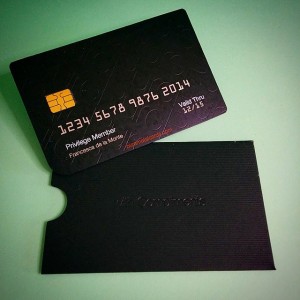
But what is a card?
[]

Ransomware

ransomware

By now, you either know someone that’s been a victim of nasty malware or have yourself been on the business end of nefarious software. The perpetual duel between security companies and malicious elements in cyberspace has changed dramatically over time, and no change has been so dramatic as the rise of a new type of threat, a threat we call…ransomware!!

...but what is Ransomware?

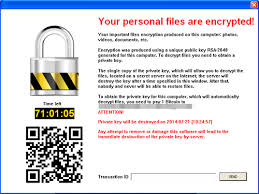
Ransomware is piece of nefarious code that infects your machine the same way any ordinary virus or spyware would. But what differentiates it from other threats is what it does after its infected a system.

Ransomware immediately seeks out specific file types like Microsoft Documents, Excel Spreadsheets, digital pictures, all for the purpose of encryption. Different Ransomwares target different file types, but the idea is behind it is to seek out these files that are considered particularly valuable to the user, and one that a user would pay lots of money to retrieve if ever lost. These files are then quickly encrypted using ‘bank-level’ encryption ciphers making them un-readable to the user.

Once the files are ‘safely’ encrypted, the user is usually prompted with the–Pay us money or never see your files again!!

The famous (or infamous) cryptolocker, would request payments only in bitcoin, before the decryption key would be released to the user, the malware has kidnapped your files and the only way to get them back is to pony up the cash.

In essence, cryptolocker held your files from ransom, in much the same way kidnappers hold kids for ransom in those hollywood movies, but unlike hollywood this is real, and the one and only way to get back the files is either pray for a miracle, or make the payment.

[]

Hacking Government, Malaysian Style

hacking-government

The simplest definition of a hacker, is someone who breaks systems. We tend to equate systems to computers, but that’s a limited definition of the term. A system can also refer to a legal system or a set of processes that have nothing to do with technology.

For example, lawyers often hack around the law, looking for loopholes to exploit to give them an advantage in their case. A good lawyer is expected to work within the legal system of a country, but still try to bend it a wee bit for their clients. He’s not breaking the law, merely hacking it for his own good.

In the technology world, we sometimes define hackers as those to attempt to gain un-authorized access to computers, in other words an attacker that’s able to circumvent security measures of a server to gain access. This bypassing of security measures it what makes a hacker–but how does it reflect in a legal context?

[]