Posts for: #CyberLaw

Cyberbullying in Malaysia

Tributes are pouring in for Amanda Todd, a teenager who committed suicide after posting the video above describing how she was tormented by bullies and struggling with depression. Amanda's story was told little by little via post-it notes and it full detail about the extent of the bullying and torment and just how this poor 15-year old girl had experienced her version of hell on earth.

The story isn’t a typical one, but one that exist in a nuance variety even in Malaysia. Amanda was tricked into exposing herself in front of a webcam by an unknown person. Soon she was blackmailed and finally, photos or her were circulated to her entire school. What followed next was every bit as predictable as it is sad, she was ostracized by her friends and tormented by bullies, she even tells of how she switch schools–multiple times–even moving to a school in a different city!!

Yet, the bullies and torments followed here (aided and enabled by social networks), and Amanda must have reached her limit and at some point she eventually chose to take her own life.

Youtube has taken down the videos, but I felt Amanda’s story should be left for the world to see, as a stark reminder to all of us to look after our children, and I just hope you get to watch the embedded video before even this gets removed. I believe out of respect for Amanda–we should listen to the story she so desperately wanted to tell.

[Read more]

Let’s put the evidence act into action

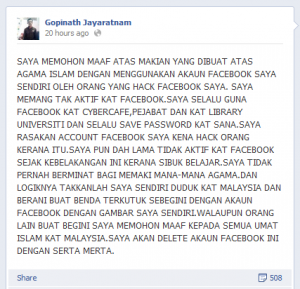
So let’s say someone in Malaysia actually was stupid enough to post something insulting Islam and it’s Prophet on his Facebook page as a status message. Then let’s say that same person claimed that his Facebook page was hacked.

Finally, we say there’s a huge backlash against this person on the internet, so even though the comment was deleted from Facebook, it has been screenshot-ed so many times, it’s now permanently etched online.

This is exactly the sort of hypothetical situation the newly amended Evidence act is supposed to address, yet for the most part it doesn’t. In fact, the case really isn’t hypothetical, it’s actually something going on right now, and it’s a great test-bed to see if indeed the evidence act would help us address these issues.

Gopinanth Jayaratnam from Klang, posted up a rather insulting statement online about Islam. Of course, a couple of people picked it up  and soon it went viral on Facebook. What followed was every bit as predictable as a bad hollywood movie, Police reports were lodged, the ‘suspects’ personal details were published online and soon a group calling itself the Jemaah Fisabilillah Klang, launched an actual attack on his house. The gate of his house was rammed into and the car parked in the compound was damaged. Fortunately, there was no report of bodily harm, but one can imagine that’s probably not too far away.

[Read more]

One Visa files suit against TM : Is it a Human Rights abuse?

The Star today reported that a company called One Visa is suing Telekom Malaysia (TM) for providing telecom services and infrastructure to squatters on it’s land in Negeri Sembilan.

TM was alleged to have trespassed five pieces of One Visa's land by supplying the telco services to the illegal occupiers of its land.

One Visa had sought RM23.07mil as special damages being the total rental value of the land based on current market value rates calculated from March 22, 2011 and continuing until cessation of the telco services and the date of removal of TM’s infrastructure from the land.

That’s right 23.07mil in ‘special’ damages for the TOTAL rental value of the land, because TM had supplied telco services to the illegal occupiers.

Now, I’m no lawyer and I’m not familiar with the case, So I cannot comment on the legality (or illegality) of the squatters staying on the land. What I can comment on though is the utter ridiculousness of the suit to sue TM for the full rental of the land just because TM had supplied telco services. That’s like charging your neighbour rental for your entire house value, just because his mango tree has over-grown into your garden.

[Read more]

Ban Youtube in Malaysia?

Rais Yatim a Member of Malaysian Parliament and a Minister in Government, has threatened Youtube with legal action over their refusal to remove the video of Innocence of Muslims. Nevermind the fact that Youtube have tried their level best to restrict access to the video from Malaysian users, and also failing to recognize the fact that Youtube is merely a video sharing site.

You have to sympathize with Google, they’ve drawn the line the sand and they’re getting the most flak of anyone in this debacle. Most people seem to forget that it was a Youtube user (not Youtube itself) that created and uploaded the film. It also may have slipped your mind, that the video clip is available on other less prominent video sharing sites like Vimeo. Yet Google is sticking to it’s guns under enormous pressure not just from Muslim Governments but from it’s own Government to take down the offensive video. At the very least they deserve commendation for their courage in the face of adversity.

[Read more]

Censoring Innocence of Muslims in Malaysia

The Malaysian government has requested that Google take down the video Innocence of Muslims, and Google has since complied. As of today, anyone trying to access the clip from a Malaysian IP address would see a screen that reads “This content is not available in your country due to a legal complaint. Sorry about that.”

The clip is most definitely offensive, and demeaning but what is quite obviously isn’t is–serious. The first thing anyone notices from the clip is that it’s of low quality, there are multiple versions of Malaysian Gangnam style that are made with far higher quality than the clip, yet this one particular clip has managed to create such an uproar that people have killed for it. I’m not defending the clip, or opposing it.

What I am against is Governments and Corporations coming together to censor something ‘on behalf’ of the people. What I am against is a ineffectual censorship, which instead of preventing people from viewing the clip, actually nudge them towards actively searching for it online.

In the end, we have to say that video clips don’t kill people–people kill people and  in my view the censoring of the clip is both ridiculously short-sighted and terribly ineffective.

[Read more]

Evidence Act Technological Misconceptions: A response to Rocky and Fatimah

The government has finally 'relented' and now wants to 'discuss' section 114A of the Evidence act 1950. Now it's great because it proves beyond a shadow of a doubt that:
  1. The internet can be used for fantastic good.

  2. The general Malaysian public can make a difference in the governance of the country.

My website also had the pop-up banner, and according to Google Analytics, all 300+ people who visited yesterday were at least enlightened by it.

However, there are some misconceptions about the act, or more specifically misconceptions about the technology behind the internet. The only reason, I’m writing this post is because yesterday morning RockyBru posted up content by a blogger named Fatimah Zuhri, defending the act. Why on earth would a blogger defend the act is beyond me, but it became clear that her understanding of key internet concepts were way off the mark.

From a technological perspective, she was advocating from a point of ignorance, and Rocky whose a popular (or unpopular) blogger/journo only served to spread these misconceptions. I hope to point out how it is very difficult to pinpoint the origin of an anonymous or malicious post, and how shifting that burden to the ordinary citizen is unjustified.

So let’s start with the Post which you can read here, although for your sake I wouldn’t suggest it. Partial contents of the post is quoted in here as well.

[Read more]

Personal Data Protection Act 2010 Malaysia

[box icon=“chat”]

Data is the natural by-product of every computer mediated interaction.  It stays around forever, unless it’s disposed of.  It is valuable when reused, but it must be done carefully.  Otherwise, its after-effects are toxic. - Bruce Scheneier

As society moves towards a ‘knowledge’ based society, data naturally becomes a by product. Every action you perform leaves a tiny digital trail like breadcrumbs in the forest, and just like though breadcrumbs each individual data point is insignificant, but piece them together–and you’ve found you way home.

What we use to buy we cash, we now buy with credit cards – with every swipe, digital data is created and stored, it records the amount of the transaction, where the transaction took place, and the banks bill the customer, which means it can tie it to an address a person, their age, their income and even their preferences.

Photos were physical things we could only share in person,but now we share them digitally on social networks–all those photos are stored–permanently, and they’re tagged with meta data regarding the photos location and the names of people in the photo. A lot more data, and a lot more public. Even if you randomly stumbled across a photo on Facebook, chances are you could easily find out who the people in the photos were, and where the photo was taken–that wasn’t the case before digital photography.

When we use to pay toll booths in cash, we now use touch N’ Go, so there is a full blown record of where we travelled and at what time. Coupled with the CCTV footage they can even identify which vehicle you used. Tie that with your credit card and we can determine where you fueled before you got on the highway, coupled with CCTV footage from the Fuel station we know how many people were in the vehicle. Look at the JPN records and we’ve got the car owners name, and contact information, a quick search on Google reveals his profession on LinkedIn, his favorite places from tripadvisor, his friends on facebook, and if we pay close enough attention to his tweets chances are we can find out which football team he supports or which political party he’s aligned to.

What used to be something you’d only reserve for your close friends at the kopitiam now is public knowledge, provided some one takes the trouble to Google your name.

And the list literally goes on and on, and all these add the amount of our personal data stored digitally online–data that can be used to determine who you are, where you are, what you like, what your political beliefs and religious inclinations–even your medical history and sexual orientation. I’m not kidding, there’s a story I love to link to which tells of a supermarket who knew a teenager was pregnant before her father did.

One of the biggest abusers of personal data has been advertising companies and mail-order folks, the people that spam you day in and day out with emails about viagra and cheap housing loans, however as time goes on a lot of other people are getting on board, like insurance companies who want to know more about your medical history or driving records, banks who wish to determine if you’re really eligible for a loan–even a supermarkets may have a direct interest in your personal data.

It has become imperative that we as users look towards protecting our data online, but there also is an imperative for governments to regulate the way our data can be used–even by governments themselves (or ESPECIALLY by the government).
[Read more]

Is your Wi-Fi safe?

With the newly enacted Evidence Bill Amendment, you would have been deemed to have published everything that originates from your IP address. What that means is that if someone hacks your Wi-Fi and then uses it to publish malicious or seditious statements online, you will be deemed to have published it, and the onus is on YOU to prove you’re innocence rather than for the prosecution to prove your guilt.

So obviously with the new law floating around, Wi-Fi security should be at the top of every Unifi Subscribers agenda–if it isn’t already.

However, how secure is your Unifi Wi-Fi connection?

The short answer is not so secure.

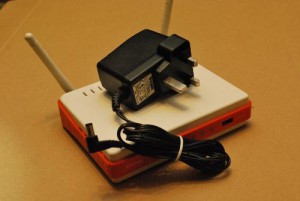
The brilliant blog Lifehacker recently posted an article on how you can hack Wi-Fi connections secured by a WPA or WPA2 password. The post is quite detailed but even I have to admit the technical skills neccessary to pull this off is somewhere between intermediate and expert. At the end of the post is a link to a spreadsheet detailing all the devices that are susceptible to this hack, and one of those devices is the DLink Dir-615 Wi-Fi router, if it doesn’t sound familiar let me refresh your memory–it’s the router that Unifi gives out to all Unifi customers!!! (que bone-chilling Alfred Hitchcock Movie sound)

Now taking aside the fact, that I could probably call all Unifi customers to request the Wi-Fi password printed at the bottom of their router, and 50% would probably provide that to me with no issue, this also means that for those people smart enough to hide their passwords – I can still hack your Unifi Wi-Fi connection no matter what you do on your router. There’s literally nothing you can do, hiding SSIDs don’t work and neither will MAC address filtering. Of course this is all theory, and testing this theory took a lot more time than I had, so I’m not sure.

What I am sure is that Unifi have their own firmware for the DIR-615 router, and that’s a partially susceptible router, meaning some firmwares are susceptible some firmwares aren’t, and it’s a coin toss and whether your router at home is susceptible.

Now, while I know of a few people who hack Wi-Fi passwords just for the fun of it,and there’s a lot of references and material online detailing the steps required–so we all know this works. In fact you can buy packages online that allow you crack the routers easily :). This blog written in Malay claims that they’ve successfully hacked a DLink Dir-615 router, I’ve no doubt it’s possible, but it’s not easy and it takes time.

Either way though, it’s always good to remember this. There is no such thing as impossible to crack, merely inconvenient and infeasible. Don’t believe me? Check out this story of how a group of University Students manage to hack a US Military Drone in mid-flight using nothing more than $1000 worth of equipment, do you really think your Wi-Fi at home is more secure a ‘death from above’ US Predator Drone? Every Wi-Fi access point hackable, it’s only a matter of how much time, effort and money is required.

[Read more]

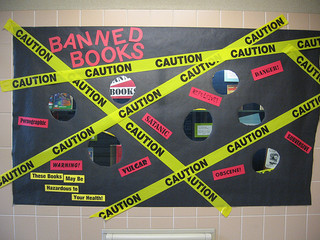
Is Dowloading a banned ebook illegal?

Let’s get straight to the point, the latest case where the Federal Territory Islamic Affairs Department (Jawi) is prosecuting a store manager is both disgusting and without merit. Not only is she just a Manager carrying out here duties–thereby making the bookstore liable instead of her, but the raid on the bookstore was carried out BEFORE the book was banned by the Home Ministry. So here in Malaysia, not only will the Government be able to persecute you in a guilty until proven innocent manner, but apparently government agencies can persecute for possession of a book before it is banned.

However, politics aside, let’s talk technology!!

What if I used Technology to bypass all government censorship. So instead of buying the book from Borders (or MPH, Popular or Kinokuniya for that matter), I simply download the Kindle version of the book online?

I did an online search, and indeed found that Amazon has a Kindle version of the book retailing for $11.99, if you already own a Kindle in Malaysia, then you can bypass all this drama and simply download the book to your Kindle. Of course, there are legal concerns with just downloading regular books from Amazon, much less banned books–so be warned!!

Now I wouldn’t recommend it and there are huge legal questions, but technically–it can done, and it can done easily. I’m start to finish in 5 minutes–it really is that easy.

My point isn’t that the book should or should not be banned, my point is that the ban can be circumvented with ease using technology. So how effective can any ban be, when most Malaysians have access to the internet?

On top of this is a very interesting question, Does a banning a physical book constitute internet censorship–probably not. However, does banning an electronic book constitute internet censorship? Of course you may say the law makes no distinction between and e-book and an actual physical book, but the law makes no distinction between and ebook and webpage either (they’re all considered publications), and if banning a webpage is obviously internet censorship, isn’t banning an ebook internet censorship as well?

The question I believe can be synthesized into Does Banning and ebook constitute censoring the internet? I don’t have the answer, but I believe there are 2 aspects:

  1. The Traditional legal aspect as covered by the Printing and Publications act 1984.

  2. The goverment promise as outline in the MSC Bill of Guarantees to not censor the internet.

If you’re a lawyer, I would love to hear your comments.

[Read more]

Internet Privacy with TOR: Should the internet be anonymous

It’s an irony that while the internet was the first place you could create avatars and split personalities to impersonate others, it has now turned into a free for all buffet for private data. I previously shared on how the ads you see on facebook were inherently tied to the Google searches you perform, and how ad companies have probably gathered so much data on you that they can find out if you’re pregnant before even you do.

With that in mind, many people still have an antiquated concept of a fully private and anonymous internet, in fact in most cases its easier to track an internet connection than an actual physical person, and its actually quite possible that a confiscated computer from your home could prove your whereabouts for the last 2 years. Earlier this year, a 19 year old girl was strangled to death while she was asleep, her alleged killers were actual stupid enough to perform an internet search on “chemicals to passout a person,” “making people faint,” “ways to kill people in their sleep,” “how to suffocate someone” and “how to poison someone”. Needless to say, the evidence seems rock solid, and these dumb criminals would go behind bars.

On the other hand, some criminals aren’t so stupid. In fact, the FBI, Interpol and various other law enforcement agencies have entire departments looking and searching for online criminals who do everything from fake money Nigerian scams to trafficking child pornography on the internet. These guys have proven quite difficult to track because of something called TOR.

[Read more]