Posts for: #CyberLaw

LGBT Movies Ban in Malaysia

Rais Yatim LGBT movie Ban, Lesbians Gays Transexuals and Bisexuals

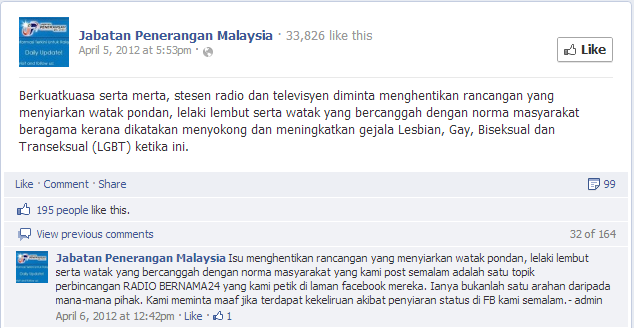
This is a bit of old and stale news, but in April of 2012, the Information Ministry released a 'directive' to ban all movies or films that featured gay characters. In their defence, the Ministry did later clarify that their facebook post wasn't a directive, but a topic for debate. Of course, there can't be much defending when the post itself starts with "Berkuatkuasa serta merta, stesen radio dan televisyen diminta menghentikan.." which effectively translates to "With immediate effect, all radio and television stations are requested to stop..".

However, this little directive provoked my thoughts, because I’ve always been intrigued by the ‘weeding’ effect of censorship. The ‘weeding’ effect is a simple analogy I came up with while I was –you guessed it– weeding my garden. You see I’ve got a small garden in my home, and every now and then I put a pair of pink rubber gloves and go weeding around by hand, it’s a tough job, but someone has to do it. Now for those of you who’ve weeded anything before you know those nasty little weeds tend to grow in between the grass, and it’s really difficult to pick them up without plucking a fair bit of non-weeds with them. In fact, if you’ve got a lawn like mine–it’s almost impossible to get rid of the weeds without getting rid of the lawn grass as well. You most definitely want to avoid plucking out that expensive lawn grass you laid down.

The same goes with censorship, every time you try to censor something like the word ‘Breast’, you may inadvertently censor out something entirely innocent and useful–like Breast Milk, or Breast cancer, or Breast feeding. So while I really doubt the keyword Breast would lead to anything other than porn for the first 10,000 entries on Google, censoring the word Breast is really an ineffective solution because it could censor out a lot of really useful and relevant information.

[Read more]

Selangor Cyber Cafes made to retrieve personal data

Cybercafe operators made to retrieve MyKad information

Goldfries today reports that Selangor Cyber Cafes were given new regulations to make them 'healthier'. Among the new regulations put in place were:

>register their patrons’ personal details based on their MyKad or MyKid identification cards. >use transparent and untinted glass so that what happens inside can be monitored; >have an open layout with no “blind spots” so that illegal activities like cyber gambling cannot be carried out without being easily noticed; >have brighter lighting to give the perception of a “Healthy Cyber Cafe” instead of being dark and dingy; >operate a minimum of 40 computers in urban areas, and 20 computers in rural areas.

[Read more]

Why the SKMM Rm200 smartphone rebate is a bad idea

The Malaysian Communications And Multimedia Commission (MCMC) or better known by its bahasa acronym SKMM, has recently announced that the government will be offering a 'rebate' of RM200 of a list of 'selected' smartphones for youthsaged 21 to 30 years old. The program called the 'Youth Communication Package' or Pakej Kommunikasi Belia (PKB) has come under tremendous scrutiny from both the general public, and even members of the ruling government as well.
A press release from the SKMM further elaborates:
Youths who qualify for the RM200 rebate will be able to purchase 'selected' 3G smartphones costing up to RM500 from selected dealers and agents appointed by service providers. With the rebate, they are expected to pay no more than RM300 to own a new 3G smartphone. “The idea is to spread the incentive across to those who do not yet use smartphones. We really want to help those who cannot afford to change phones to upgrade from their old 2G phones to a basic 3G smartphone.
The Malaysian cyberspace was immediately set abuzz when the announcement was made. The twitter outburst over the scheme is primarily on the price cap of Rm500 because when the Prime Minister announced this back when the budget was tabled, there was no mention about the RM500 price cap on the phone. Even UMNO youth chief Khairy got in on the action--requesting the government not limit the price of the phones, even after the SKMM 'clarified' why it was offering the rebate to only those purchasing phones under Rm500. (apparently we don't offer rebates to the rich)
[Read more]

Malaysia signs ITU

About 2,000 delegates representing major telecommunication industry players, experts and representatives from nearly 200 member countries of the International Telecommunication Union (ITU) assemble here to discuss the International Telecommunication Regulations (ITR) at theWorld Conference of International Telecommunications 2012 (WCIT).

Shouldering the responsibility as a member of the ITU Council for Asia- Pacific, Malaysia is expected to highlight the important issue of telecommunication network security and the right to protect the sovereignty of a country.

[Read more]

Does the government have a right to shut down telecommunications services?

Press.Tv reports that Pakistan has suspended mobile phone services in several major cities to prevent terror attacks on minority Shia groups as they celebrate the holy month of Muharram. The rationale behind the suspension is that the terrorist use mobile phone services to detonate bombs and as a result the suspension of mobile phone services would help prevent such attacks. Meanwhile, Ihsanullah Ihsan, a spokesman for the militants’ umbrella group, the Tehrik-e Taliban Pakistan (TTP), has claimed that suspending mobile phone services will not hold them back from carrying out their deadly attacks against the Shia Muslims.

This is ultimately a case of the government having too much power, the real threat of terrorist using bombs somehow resulted in a government issued communications blackout throughout the country–which does little to prevent the terrorist who are hell bent on killing.

I’m guessing that cellphones are picked as detonators for their ubiquity and range, however if you remove the cellphone from the equation you still have hundreds of possible detonation mechanisms, including timers (like the ones from early Mission Impossible shows), walkie talkies and even just a person standing by the bomb and detonating himself with it.

While many of us are of the opinion that a government should do everything to protect it’s citizens, we often fail to to realize that the mechanisms the governments utilize to protect us has a cost–a cost usually paid for by the very people they are supposed to protect.

A full blown mobile service block, doesn’t just block the terrorist–they block everyone. From a father frantically trying to locate his daughter, a hospital trying to locate next of kin in an emergency, or even a blood bank trying to contact its donors. This sort of carpet block is not an effective solution and the cost of it usually far outweigh the benefit, with the benefit being ZERO if the terrorist find some other way to detonate the bomb in spite of the block.

[Read more]

Anonymous downs Israeli web sites to protest web embargo

[blackbirdpie url=“https://twitter.com/YourAnonNews/status/269572459651555328”]

In what can be described as a great battle for the freedom of the internet, Anonymous – those self-proclaimed hacktivist – have launched a series of attacks on Israeli websites owned by the Israeli Military or Government. The attacks come in the midst of a huge Israeli offensive on Gaza, but contrary to what CNet would have you believe, the attack themselves were not in retaliation to the Gaza offensive, but rather a retaliation to the Israeli ‘threat’ of severing all internet communications in and out of Gaza.

Evidence Act: Anonymity before the internet

I read a brilliant article on the Evidence act by Zul Rafique and Partners that I think everyone should read. In it, the author compares the newly amended Evidence Act (supposedly amended to combat the evils of the internet) to a sub-section of the original act meant to look into telegraphs. Now I must admit, that as an internet kid, I don’t quite understand the concept of a telegraph, but the point is that even before the internet Anonymity was possible.

The public perception that is reinforced by ignorant government statements, is that with the internet has enabled anonymity which in turn has enabled crime.

According to Datuk Seri Mohamed Nazri Aziz, Minister in the Prime Minister Department, the amendments were tabled to address the issue of Internet anonymity since this very fact makes it extremely difficult, if not impossible, to trace the alleged offender.

That is a false statement.

Let me introduce you to snail-mail.

In the past, long before the internet was around, people use to communicate via letters and postcards that were hand-delivered by postmen to your doorstep. This is a foreign concept to most children but it’s good to let them know just how hyper-connected they are in relation to their parents or grandparents.

When you send a letter, you write a note on a piece of paper, sign it at the bottom (presumably with your name) and then place it into an envelope. You then write the name and address of the recipient on the envelope, afix a stamp (that acts as a proof of purchase)–and then drop it off at any post office you see fit. The Post Office then somehow routes that letter to the recipient on the envelope–physically hand delivered.

Notice–you never have to prove your identity when you send a letter or postcard. No where in the chain of events are you ever asked for your IC or phone number, in fact I could just as easily write a malicious letter, post it to the Prime Minister and sign it as Datuk Seri Mohamed Nazri Aziz. Would the Prime Minister then automatically assume his cousin sent him the letter just because it was signed in his name?

I guarantee you it’ll be harder for the authorities to trace that physical letter as opposed to a similar digital email. Too many people watch CSI these days to believe that statement, but there’s a reason why kidnappers still use physical constructs–because in the digital world you always leave a trace.

If we apply the amended Evidence Act to the letter analogy, Datuk Seri Mohamed Nazri would be charge for sending that malicious letter to the Prime Minister–even though he never wrote it. All of us understand the stupidity of assuming someone sent you a letter just because the letter was signed by that person, yet we seem to think nothing of it in terms of emails. In fact, if I wanted to get Nazri into a whole heap of trouble, all I’d have to do is send 1000 similar letters to 1000 different people, and sign it with his name–in that way, he’d be charged 1000 different times in a 1000 different court proceedings and even though he might be deemed innocent on each count, it’s still a whole load of trouble I can cause for him for the price of 1000 stamps (roughly Rm500 which wouldn’t pay for even one hour of a lawyers time).

[Read more]

Auditor-General report 2011 : When can Malaysians expect Transparency in IT spend

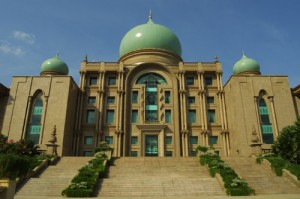
How much does Putrajaya Spend on IT?

As a tech blog in Malaysia, I thought it’d be interesting to see the latest Auditor-General’s report faired in terms of IT spend from the government. IT spend is a tricky thing, and most don’t understand just how tricky it is, particularly around big IT spend by governments–they often fail. In fact, one of my favorite blogs is dedicated solely to IT failures, aptly titled–IT Project failures.

However, even the Synopsis report of the AG report is a harrowing 87 pages long. It’s not just the length that puts of me off, but rather the sheer dry-ness of the language that is used. Interestingly, not a single diagram exist in the documentation filled with enough monotone text to put even the most ardent auditor to sleep, and I’m no auditor so I nearly dozed off after the 2nd page. I had to take a different approach if I was to get a synopsis of the synopsis, fortunately I work in IT (not auditing or law), and I know of function in Adobe Acrobat that let’s you quickly search a document–it’s called the FIND function, and I was a deadly ninja in the art of the FIND.

So, armed with the FIND function on Adobe Reader, I combed through the document looking for the word ‘system’ and where it tied with an actual IT system too see just how well our government was in delivering IT systems in 2011. Below are just a few paragraphs pertaining to the AG’s report and below are 2 prime examples of the the magnitude of IT failures from Putrajaya.

Sumptuous Erotica and Barisan Nasional

Alvin and Vivian interview on youtube

In case you've been under a rock for the past week let me fill you on some details:

Alvin Tan and Vivian Lee–both Malaysians started a little porn blog called Sumptuous Erotica attracted headlines both in Malaysia and across the causeway. However, unlike other couples who’ve been caught with their pants down before, both Alvin and Vivian seem indifferent to the controversy surrounding them, more importantly they seem quite confident that they’ve done nothing wrong and have nothing to apologize for to anyone.

On the face of it–they’re right. Whatever you think Alvin or Vivians parents have against their children posting pictures of themselves naked online…that’s a matter for them to settle, not for you to be a busy body about.

Software piracy in China : Can the Yankees really complain?

Did you know the term ‘Yankee’ is thought to be derived from the Dutch name Janke, which means “little Jan” or “little John,” a nickname that can be traced back to the 1680s, when it was used as a slang term for pirates. Yes, you heard that right, the Americans were regarded by the Europeans as Pirates. At least that’s what Matt Mason, author of The Pirates Dilemma suggest.

Matt isn’t just an author of a book, but also the Executive Marketing Director of BitTorrent, so when he says something–I listen. Things like: [box icon=“chat”]

But the term really gained steam during the Industrial Revolution. Europeans began using the term to refer to all North Americans as a result of America’s national policies towards European intellectual property. America only industrialized as rapidly as it did by counterfeiting European inventions, ignoring global patents and stealing intellectual property wholesale. Lax enforcement of the intellectual property laws was the primary engine of the American economic miracle writes Doron S. Ben-Atar in Trade Secrets. The United States employed pirated know-how to industrialize. Europeans saw America as a nation of bootleggers, which was a little unfair, as every major European country was also heavily engaged in piracy and industrial espionage at some point in the 18th century. Piracy was, in fairness, the only way the U.S. could keep up.

Of course, fast forward a couple hundred years, and now you see US companies accusing other countries, particularly China and other Asian nations of doing the exact same thing the US did to try to bridge the economical and technological gap it had with Europe. One would argue that part of the China miracle, is their lax enforcement and ignorance (or arrogance) of patent laws, but in all fairness within this space of of gross patent apathy, there exist large pockets of innovation that would otherwise be impossible if intellectual property laws were strictly enforced and followed.

Consider a very specific example of the ‘drop down’ menu in the iOS. When I bought the iPhone4 for my wife 2 years ago, the only way you could get the ‘fancy’ drop down menu that enable/disabled 3G and Wi-Fi was by jail-breaking your iPhone. Now it comes standard with iOS from Apple, so you could in theory argue that the worlds best design company got their que from the pirate market–but you never hear apple admitting to this.