Posts for: #Cloud Computing

Skali Cloud: A review ultra-scalable skali Cloud

A couple of months back, I wrote a small article about the Skali Cloud and how I liked the niche approach they took to cloud computing. Skali offers a very unique ultra-scalable instances that can be attached to physical machines of variable performances and storage space. In normal English, that just means you can actually the processor speed, amount of RAM and even storage space of your machine (ok that wasn’t ’normal’ English).

In contrast, Amazon and every other cloud offering I know of, offer a specific number of machine types (usually 3 to 8) that come in fixed configurations with respect to processor speed, RAM and storage. The great thing about Skali is that if you have certain applications that would require high processing speed with minimum RAM, you can literally create a physical machine that fit your needs exactly. If you used Amazon for example, you’d have to acquire very large instance types on Amazon and usually pay a high premium for storage and memory that you really don’t need. Similarly for applications that don’t require high processing speed, but high amounts of memory instead could equally benefit from creating highly customized virtual machines to suit your performance needs.

A couple of weeks back, a commenter on my Skali cloud post and thanked me for the post, that commenter turned out to be Tengku Farith, the founder of Skali. So I wrote back requesting a small trial setup, and within a few days I manage to setup a trial account with Rm200 credit on the Skali cloud. (pretty awesome!) So I manage to wriggle a couple of hours to spend time toying around with the Skali cloud and here’s what I found:
[Read more]

Maxis Loker: A review

As you know, I’m not really happy with Maxis. I was utterly disappointed by their latest S3 launch, I don’t think their cloud offerings of ebook portal is anything to shout at, and the if my wifes office would get decent Digi coverage, I’d switch in a heartbeat.

That being said, this is one of the times I think Maxis has done a decent job on their Loker offering. It is quite well executed, and if I do say so myself, getting 25GB of free online storage space when you purchase an S3 from Maxis is quite an enticing offer.

So what is Loker?

Loker is a simple online storage area for Maxis customers to store their online files. Free registration comes with 5GB of free storage, which you can upgrade all the way to 25GB of storage space coupled with (as far as I can tell) unlimited downloads and uploads.

It’s also important to note that Maxis is offering the full 25GB to anyone who signs up for the Samsung Galaxy S3 package, which to me is a great value adding tool.

The service however, is only available to Maxis customers, and you need a Maxis phone number to register.

[Read more]

REALLY cheap Cloud Storage

Cloud Storage seems to the in thing these days. With the launch of Google Drive, my previous post on how to create a site to share large files seem a bit irrelevant, and with the even hotter news that Google and Microsoft may launch their own IaaS initiatives to compete with Amazon it looks a foregone conclusion that cloud storage will become ridiculously cheap in the years to come. So cheap in fact, it may make the large Hard Disk in your home seem as irrelevant as my post.

Now, although Cloud Storage is cheap and can only get cheaper, I am – by all accounts– the cheapest cheap skate I know, and I’m always ready to try a new deal even when the new deal is just $0.03 less than the old deal.

[Read more]

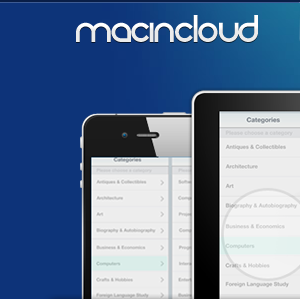
MacinCloud: Develop iPad / iPhone apps on Windows

So you want to develop an iOS application for your iPhone or iPad.

Thinking of being the next big app to hit the appstore.

Only one problem, developing applications for the iPhone and iPad require a Mac or more specifically a machine running Mac OS X. It could be you actually own a Mac, you could go and buy yourself an RM1800 Mac Mini, or you could try a hackintosh, although just creating a hackintosh would be a small project in itself.

Now Hackintosh is actually way beyond the scope of this article, so rest assured I’m not asking you to do anything ridiculously technical or suspiciously illegal. (although those are my favorite type of things to do)

If you’re reading this though, chances are you have a windows PC at home, or even Ubuntu, that’s quite standard and sufficient if you wish to develop Android apps, and they rake in money too.

iOS apps however, are a different beast all together and require a Mac OS X device, which is pretty easy to purchase in Malaysia, but they don’t come cheap. You may want to think hard before plunking down an extra 2-3 thousand ringgit just to ’try’ your hand at app development. Just like you wouldn’t want to buy 3 year subscription to your neighborhood gym only to go 5 times in the first month – and then never again!

[Read more]

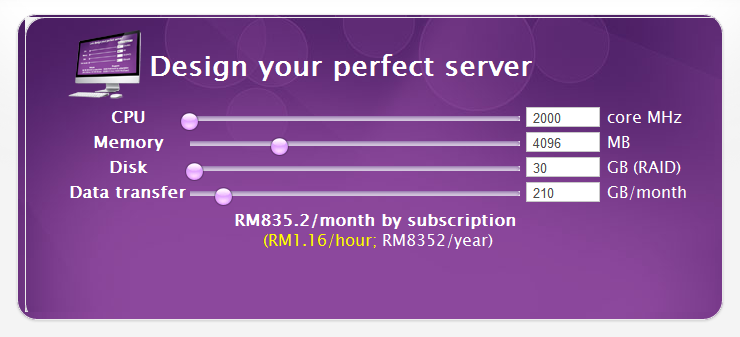
Design your perfect server with Skali Cloud

After doing some research on Malaysian Cloud offerings particularly the IaaS offerings, I noticed something rather interesting from Skali. Now I always remembered Skali as an early web startup some time back in the 90s trying to ride the internet wave but failing all along the way, this however has some promise.

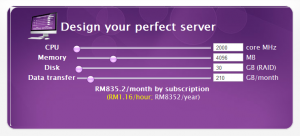
Skali takes cloud scalability to a whole different level with their cloud offerings, unlike other IaaS providers who offer a fixed number of machine types Skali offers a fully scalable machine that you can add processing power, Memory and Disk independently. In essence near unlimited amounts of options in terms of machine type compared to just 3 from Maxis Cloud.

The pricing still seems high, but it can go toe-to-toe with Maxis although it would depend on the specific requirements. From just the high level you can sense that these IaaS providers are going to compete for Malaysian customers but they’re competing with very niche offerings. Maxis ace up it’s sleeve would be the unlimited data transfer, which Skali charges at a mind-blowing Rm2/GB. Skali on the other hand offers an entire range of machine types (possibly in the hundreds), while Maxis offers just 3.

The choice between Maxis or Skali would be a simple one that would come down to how much data transfer or scalability you need in your application. That being said, let’s take a look at some other offerings from Skali Cloud.

[Read more]

MaxisCloud : A silver lining in terms of data transfer

A couple of weeks back I wrote a long post on the Maxis Cloud comparing it to other IaaS providers like Amazon and rackspace. That post wasn’t too kind to Maxis, and I did mention that there was no reason to use it…unless the data transfer was free.

As it turns out, data transfer on the Maxis IS FREE!!

This is a good step in the right direction for 2 reasons. Firstly, it means for high end cloud computing users that require lots and lots of data transfers, you’re looking at one of a IaaS provider that gives you unlimited data transfer inward and outward. Secondly, it means that there is a IaaS provider in Malaysia, that offers something that can be considered reasonably price, particularly if you’re hoping to be dealing with a lot of data transfer.

[Read more]

Maxis Cloud : Too Late, Too expensive and Too Restrictive

Maxis recently launched their new IaaS offering in the form called the Maxis Cloud. According to Lowyat.net the Maxis Cloud is said to be the " the most advanced on-demand, real-time, fully managed cloud service in Malaysia, Maxis Cloud allows businesses to scale their cloud computing infrastructure according to their needs at any time through its self-service portal."

That’s basically calling yourself Jaguh Kampung. Pardon the sarcasm, but the Maxis Cloud does seem a tad bit expensive for a such a late entry into the game. You’d expect new IaaS providers that show up this late in the cloud game throw everything including the kitchen sink to get new subscribers. That however, has been lacking and a marketing strategy that seems more intent on selling IaaS to non-believers as oppose to selling the Maxis Cloud itself isn’t helping their case.

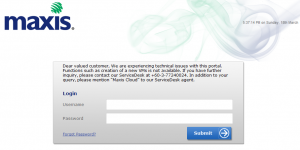
I’d loved to be rooting for Maxis, but most of it’s offerings just don’t add up, and there’s a whole bunch of questions about it’s bandwidth charges, support availability and API specifications that aren’t clear enough to me to make any sort of comparison or even recommendation. Plus the fact that its self service portal had a ’technical issue’ when I logged on didn’t really bode well for my experience.

That being said, while analyzing I noticed that there is one thing Maxis could offer that could tilt the tables in its favor, Maxis is a communications company after all (unlike Amazon or Rackspace) and I think there just might be a chance it could offer something niche that would make it stand out. But first, let’s take a look at some key concepts:

[Read more]

Original Microsoft Office for just Rm18/month

Yeap, you read that right. Microsoft office is the bane of all small business owners, they need it to generate documents and spreadsheets, but it cost a bomb to own. The standard Microsoft Office suite runs well over Rm600, and according to this pricelist from software exchange, Microsoft Office 2010 cost a whooping Rm643. Now Rm643 may not seem like much, but when a laptop/desktop cost just Rm2000, that’s nearly 30% more cash upfront for your software needs.

How is this possible, well Microsoft is offering Office365 worldwide and has even partnered with TM to sell their cloud offerings locally in Malaysia. Office365 is a cloud based version of the Microsoft Office, and it even includes things like email, collaboration and project management software. All of this for just Rm18/month is a pretty sweet deal in comparison to putting down Rm600 per user as a initial capital expense.

[Read more]

Adobe releasing Creative Cloud for $49.99 soon!

Adobe is looking to release a cloud version of their creative applications online called creativecloud. From what I gather from their website it looks to be like a office365 version for creatives. This is probably a step in the right direction, Adobe software usually run into the hundreds or thousands of dollars, and buying the licenses for that software usually incur a huge capital expenditure for startups looking use these applications.

[Read more]

UC Berkeley says it: Google Apps beats Office365, but not by much

UC Berkeley is easily one of the most recognized institutions of learning with 70 Nobel Laureates to their name, so when they say something about tech you’d better listen up. This time however, it’s that big battle in the cloud between Google Apps and Office365 or as I would call it – The Battle for the Doc Cloud. The question is Who Will be the Last Cloud Standing?

As more people start to use cloud based applications, it’s getting more apparent that this little space in the cloud is about to see a boom pretty soon. Now consider this, the Microsoft Business Division unit is the largest revenue contributor to Microsoft, bringing in a total of $5.62 billion in the first quarter of 2011 (that’s the quarter ending sept. 2011). That trumps the Windows division with just $4.87 billion in revenue, now the difference doesn’t look like much (and probably doesn’t to Microsoft), but what that means is that the Business Division (with things like office, lync, sharepoint and exchange) brings in nearly $4 billion dollars of revenue MORE than Windows. Say it with me now people – WHAT THE #$%^.

That’s just one division of one company.

[Read more]