Local broadband speeds slower than Cambodia: Why it doesn’t matter

But when I tell people I drive a Prius, I get a sneer and look that suggest I must be a bumbling idiot, you know the one where their face wrinkles up near the nose. People ask the usual mileage questions (5Liters/100km if you’re curious), and make some oft-remark about the design–but then they end with the question that’s really a statement–isn’t it slow?
The Prius can easily top 110km/hour and still get better mileage than the much smaller Ford Fiesta. There isn’t a single highway in this country where you can legally do more than 110km/hours and hence any car that can do 110km/hour can’t be slow.
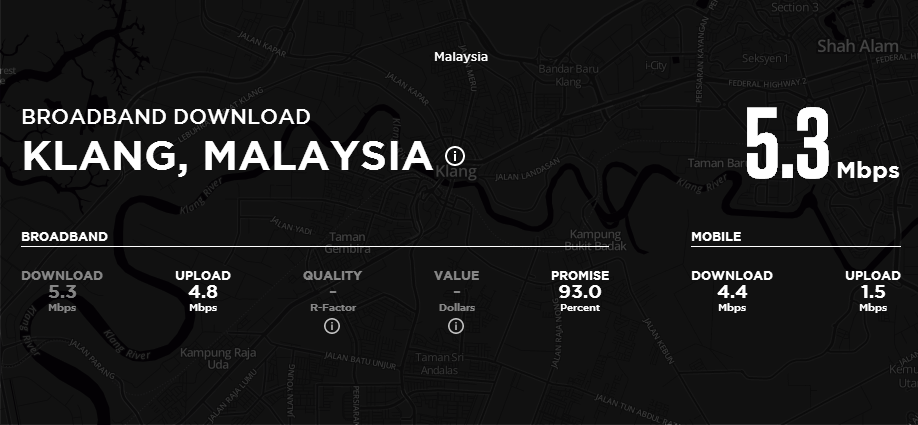
So why is it, that people make such a fuss that an Ookla study concluded that our average broadband speed is slower than Cambodia–when the average of 5.48Mbits/second is still fast enough for every online service imaginable.
I’m a tech geek, and I’m happy with my 5Mbps connection from Unifi.
At 5Mbps, I can download content faster than I can watch it–anything faster is excessive.I can watch Netflix in HD (maybe not 1080p, but good enough), I can watch youtube without lags and I can listen to any podcast, radio channel or spotify without a hitch.
And I wouldn’t enjoy these services more even if I had a 10Mbps or 100Mbps connection. Trust me 5Mbps is fine.
So what’s the big deal with the connection speeds, that our friends over at the MCMC had to release an official statement. There are some issues with broadband in Malaysia, but speed isn’t one of them. Here are the top 4 things we can do to improve broadband in Malaysia which doesn’t include speed.
1. Broadband penetration and availability
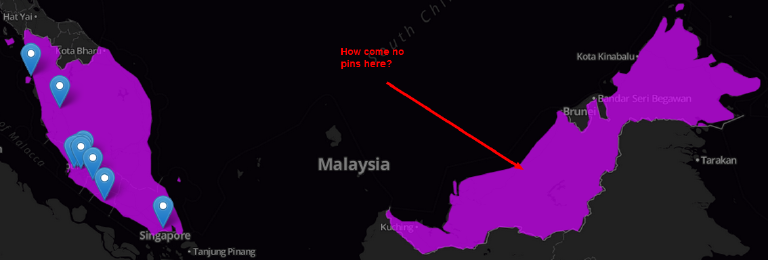
The biggest issue with Broadband in Malaysia--is the availability. Ask the guys over at the Felda settlement in Kedah if they have Unifi. If you looked at the results of the Ookla study, you'd notice that every single data point used was from Peninsular Malaysia--completely ignoring half of the country.Most people complain about the availability of broadband rather than the speed. So let’s forget about the speeds, and worry on getting fibre penetration to parts of the country that don’t have access to it. There’s a reason why Petrol Stations use Satellite communications rather than Unifi.
Sure, speeds will be a problem in 3-5 years, and we should think of them, but for the short-term we got the speed issue settled.
2. Latency
Building on the car analogy, I will admit my Prius is slow. It accelerates slowly, doing 0-100kmph in over 10 seconds.Bandwidth is like the top speed of your car, latency is the acceleration, in most cases a faster car gets you to your destination the quickest, but in some cases you’d prefer a faster accelerating one.The lower latency means that small chunks of data, like a whatsapp message or picture get delivered faster even though the bandwidth is slower. Just like a faster accelerating car would cover a shorter distance quicker.
Low latency connections are the fast accelerators of the internet, they’re vitally important to operate time-sensitive equipment, interactive content, and gaming. In some cases we don’t have any control over the latency–there’s a lot of distance between Malaysia and the servers in the US, and it just takes time to transmit and receive data over those distances. But in other cases we do have the solution, which is setting up local servers to deliver content from Malaysia–did you know Youtube has servers in Malaysia serving videos?
As a side-track, the fiber-optic cables already transmit data at the speed of light–hence to improve the latency between a connection from KL to California would require bending the laws of physics as we know it. Hopefully someone figures this out soon, because waiting 2 seconds for a Netflix show to begin streaming is just too long.
3. Price
80% of Malaysian households earn less than Rm3,000/month. The cheapest Unifi subscription is Rm150/month.Your internet bill shouldn’t cost you 5% of your net income–enough said.
4. Quality
I get a lot of emails from readers complaining about their ISPs. Truth be told, I usually respond that there's nothing I can do to help.I think Unifi and TM have done a great job. I had a severe outage 2 years ago–but that’s it. I’ve had more power-cuts and water outages over that two year period, making Telekom Malaysia the best utility company in terms of service availability.
But that isn’t always the case with all Unifi subscribers or subcribers of other ISPs. No one has written to me complaining that they’re connection was slow,which further emphasizes that it’s not the speed that matters but the quality of the connection.
Conclusion
In the same way, I don't worry about my Prius being slow because it can drive faster than the national speed limit, you shouldn't worry about an average internet speed of 5Mbps because even at those speeds you can enjoy 99% of nearly everything the internet has to offer.Instead, we should focus on getting broadbad to as many Malaysians as we can, by improving the availability, latency, price and quality.
Archived Comments